

If wishes were horses, the recent Albany news conference by the New York State Educational Conference Board could be restaged as the Charge of the Light Brigade — a doomed assault against budgetary reality.
The group, which includes school boards and administrators as well as New York State United Teachers, said school districts will need a state aid boost of $1.2 billion next year “just to maintain current services” while staying within the state property tax cap.
The Educational Conference Board also said schools need another $700 million “to move forward on critical initiatives,” including full-day pre-K. That’s a $1.9 billion increase in state aid, up nearly 9 percent over the $22 billion budgeted in the current school year.
The board’s “minimum” is $336 million higher than the $864 million school aid increase already built into Gov. Andrew M. Cuomo’s financial plan for the fiscal year that starts April 1. He would need to spend $1 billion more to hit the group’s preferred target.
Educational Conference Board members don’t think it should be too hard to find the money. They said in a research paper, “New York’s fiscal outlook has improved substantially” and “state budget surpluses are projected through 2018.”
In fact, based on spending trends, Albany still faces shortfalls. Surpluses will materialize only if Cuomo sticks by his pledge to hold spending growth to 2 percent a year, roughly the inflation rate.
Without touching K-12 school aid, Cuomo will need to reduce projected spending on everything else by $2 billion if he wants to meet his 2 percent growth goal next year. Holding the line will get harder, because Cuomo’s budget staff now estimates that state pension costs over the next few years will be billions higher than previously projected, based on revised actuarial tables that show retirees are living longer.
As another source of ready cash, school officials also pointed to an unprecedented $5.1-billion windfall the state will collect from New York-based banks that admitted to engaging in illegal transactions. Cuomo’s office appropriately labeled that idea “a non-starter.”
Cuomo’s press secretary said the governor was committed to using the windfall responsibly and not to “satisfy unsustainable and shortsighted special-interest demands now with no plan to pay for it in future years.”
The schools’ aid demands are driven primarily by rising pay and benefit costs, Educational Conference Board leaders acknowledged. They juxtaposed the impact of New York’s 2 percent property tax cap with a projected 3 percent average salary hike for school employees next year — a number they said was in line with projected 2015 salary growth for U.S. workers.
When it comes to compensation, however, public schools aren’t comparable to employers in the broader economy. A majority of organizations have some incentive pay plan, according to the same human resource experts whose salary projections the Educational Conference Board cited.
Most private firms also expect salaries to vary based on meeting goals for the year. Of course, pay linked to results and performance is virtually unheard of in the public sector — and is anathema to teachers unions.
The Great Recession showed that New York’s generous state school aid promises were unsustainable. Cuomo’s tax cap has prevented school districts from passing along an undiminished bill to property owners. Unfortunately, while schools have begun to tighten their belts, they are still too immersed in wishful thinking.
You may also like

The fatal flaw in New York’s climate Superfund law
In 2024, the New York state Legislature decided the state needed some money — $75 billion, to be exact — for “comprehensive adaptation to the effects of in New York state.”
The Legislature thought it had found Read More

Long Islanders and Empire Center Debate Homeschooling
Greater Long Island’s recent into the rise of homeschooling sparked quite a debate. Hundreds of readers on Facebook, weighing in on everything from academics and socialization to parental rights, teacher qualifications, a Read More
N.Y. fails education despite spending big
New York’s schools are spending more than ever, but student performance keeps falling.
Unsurprisingly, Empire Center’s latest opinion poll shows with how education is run. They want better results, less spending, and more choice — something th Read More
Long Island schools: Ahead of a very mediocre pack
Long Island may be New York's strongest case that money matters in education — and also its strongest warning that, past a certain point, more money is not the answer.
Long Island is widely regarded as one of New York's better education regions, exce Read More

A Bullying Lawyer Trapped an Innocent Woman in a Five-Year Court Battle – but New York Law can’t Make her Whole
We like to associate the law with justice—protecting the innocent and punishing the wrongdoers. But sometimes our laws punish the innocent and protect the wrongdoers instead.
Dutchess County mom Vika Shock learned this the hard way.
In November 20 Read More

No Energy Price Relief in Hochul’s Budget—So Far
Mrs. Hochul had been warning that the state’s green energy regime, a product of the Climate Leadership Climate Protection Act, needs changes to spare New Yorkers from a self-inflicted surge in energy costs.
Unfortunately, Mrs. Hochul’s 2027 Budget Read More
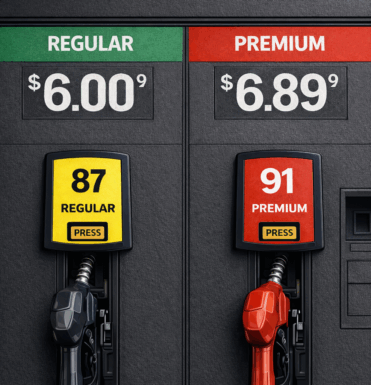
Outraged by $4 Gas, Albany Pushes Policies That Mean $6
New Yorkers could soon be paying $6 a gallon for gas, thanks to Albany’s policy mistakes. The prospect of soaring gas prices comes amid a larger rise in energy costs, accelerated by the growth in data centers and the Iran conflict. Yet $4 -a-gallon gas Read More
Hochul continues to bribe Big Health with reckless Medicaid spending
For the fourth year in a row, has used the word “unsustainable” to describe her own .
Give her credit for honesty — but not sound fiscal management.
Over the four annual budgets on her watch, the state’s share of Medicaid costs has soare Read More