

The Empire Center today kicked off DeregulateNY, a web-based contest inviting users to identify the the most needlessly expensive and restrictive rules imposed on people offering goods and services in New York State. Contestants submit entries online and compete to win a cash prize and a trip to Albany.
New York businesses contend with more than 300,000 regulatory restrictions that can artificially drive up costs and make it harder for new firms to enter a given industry or market. Some of these regulations were originally designed to protect public health or safety—but many also were promoted to limit competition and consumer choice, hampering new business start-ups and job creation.
DeregulateNY will take a fresh look at regulatory obstacles to commerce and free enterprise, letting businesses tell their stories while helping New Yorkers decide whether these rules and regulations are working as intended.
“No one is more qualified to talk about what’s wrong with the state’s business climate than the people trying to make a living under it,” said Tim Hoefer, the Empire Center’s executive director. “By giving New Yorkers a voice, we can better understand what needs to change in our state and take steps toward that change.”
Entries may be submitted through Friday, February 14, 2020. Contest winners, as decided by a panel of judges, will be announced on Thursday, February 20, 2020.
The Empire Center, based in Albany, is an independent, non-partisan, not-for-profit think tank dedicated to promoting policies to make New York a better place to live, work and raise a family.
You may also like
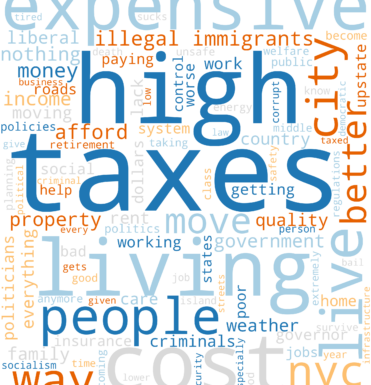
Taxes, the Cost of Living, and Feeling Ignored: Why New Yorkers Are Thinking of Leaving
FOR IMMEDIATE RELEASE ALBANY, N.Y. - New Yorkers across the political spectrum are considering leaving the state. A new finds that Republicans and independent voters most often cite taxes as the reason, while Dem Read More
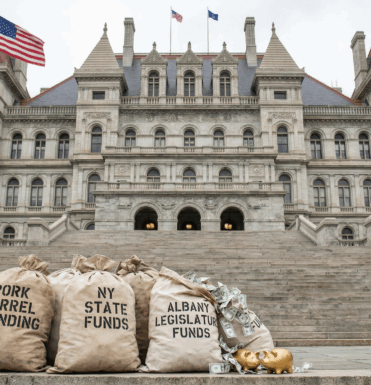
Albany Steers Nearly $100 Million in 2026 Pork Barrel Spending
Albany steered $97.2 million to 206 local projects during the first half of 2026 in the newest batch of state discretionary grants, according to. The new tranche is the latest addition to the pork-barrel grant database the Empire Center h Read More

New York’s Electricity Prices Fifth Highest in the Country
FOR IMMEDIATE RELEASE
ALBANY, N.Y. — Empire Center’s shows New York households paid the fifth‑highest residential electricity prices in the country in June 2026, trailing only Hawaii, California Read More

Nine Millionaires among NY’s Public Authorities in 2025
Nine millionaires, all healthcare executives, emerged among the 88,228 New York public authority employees, according to, the Empire Center’s transparency website.
The data includes payroll information from 385 different agen Read More
132 NYSLRS Retirees Receive Pensions Over $200K in FY2026
A total of 132 retirees from the New York State and Local Retirement System (NYSLRS) were eligible to collect $200,000 or more in pensions during the 2026 fiscal year, according to , the Empire Center’s government transparency website.
Among the 132 Read More
Empire Center Poll: Just 4 Percent Approve of New York’s Education System
ALBANY, N.Y. — New Yorkers gave the state’s education system a sweeping vote of no confidence: 47 percent said the state should improve student performance, 41 percent said it should improve performance while spending less, and only 4 Read More
New York’s electricity prices climb to third highest in the U.S.
FOR IMMEDIATE RELEASE
ALBANY, N.Y. — Empire Center’s shows New York households paid the third-highest residential electricity prices in the country in May 2026, trailing only Hawaii and California.
The latest U.S. Energy Information Administra Read More
Port Authority Payroll Passes $1.2B as 20 Employees Collect $400k+
Twenty Port Authority of New York and New Jersey (PANYNJ) employees collected more than $400,000 each in total pay last year, while average pay agencywide rose three percent, according to , the Empire Center’s government transparency website.
The Por Read More