

Monday’s income tax filing deadline marks the sixth year of Form 1040s shaped by the Tax Cuts and Jobs Act of 2017 — memorably denounced by Governor Cuomo as “an arrow aimed at New York’s economic heart,” thanks to its $10,000 cap on state and local tax deductions.
Even before the new tax law had been passed by a Republican Congress and signed by President Trump in late 2017, Mr. Cuomo was framing it as a politically motivated attack on New York and a handful of other high-tax, deeply blue states. His criticism set the tone for other New York pols in both parties, most recently a cohort of suburban Republican congressmen who’ve waged a futile effort to restore a larger SALT deduction for some of their constituents.
Amid all the bipartisan noise, however, most Empire State tax filers may have noticed something interesting: their federal tax bills haven’t changed much at all. Even in highly taxed New York suburbs, most home-owning families with children are feeling a smaller federal tax bite. Conversely, while the TCJA was widely portrayed on the left as a “tax cut for the rich,” New York’s income millionaires benefited far less from the TCJA than those in lower income brackets.
The seemingly counterintuitive reality of the law’s impact in New York stems from provisions largely ignored or unmentioned by the political critics on both sides of the aisle.
First and foremost, in addition to lowering rates in most tax brackets, the law significantly increased the standard deduction. Prior to 2018, standard deductions ranged from $6,500 for single filers to $13,000 for married joint filers. The TCJA doubled them, and thanks to inflation indexing, they had risen to $13,850 for singles and $27,700 for married couples as of 2023. Along the way, the number of New York taxpayers needing to itemize dropped to just 10 percent from 35 percent of all filers.
While the TCJA also eliminated personal and dependent exemptions, it more than made up for that change by doubling the child tax credit, to $2,000 from $1,000, creating a new $500 tax credit for other dependents.
In an especially beneficial change for New Yorkers, the 2017 tax law also rolled back the Alternative Minimum Tax. Originally targeted at a tiny number of very high-income households, the AMT by the 1990s and 2000s was disproportionately applying to the six-figure middle class of high-tax states like New York.
In the last year of the previous tax law, the AMT raised $5.4 billion from more than 569,000 New Yorkers, including a large majority of those earning between $200,000 and $1 million. By 2021, it was hitting just 16,490 households for less than a tenth of the pre-reform total.
The TCJA changes that did the most to offset the SALT cap — standard deductions, child credits, the AMT rollback — mattered little to New Yorkers making more than $1 million, who pay a highly disproportionate share of all state and local taxes. While their marginal rate was cut, to 37 percent from 39.6 percent, it wasn’t enough to make up for the loss of SALT deductions that had averaged more than $500,000.
And despite loudly — and accurately — warning that the SALT cap “encourages high-income New Yorkers to move to other states,” Mr. Cuomo himself only made it worse. As part of his last budget, just four months before resigning in August 2021, he signed off on the largest single-income tax hike in New York’s history. The top rate, including a previously “temporary” millionaire tax of 8.97 percent he had once promised to eliminate, was raised to a now non-deductible 10.9 percent — bolstered by New York City’s local rate to nearly 15 percent, the highest in the country.
Nearly all the provisions of the 2017 federal tax law are scheduled to expire at the end of next year. Only no matter who controls Congress and the White House by then, the SALT cap, especially for high earners, seems likely to be extended — if not made permanent.
If the 2017 tax law was “an arrow aimed at New York’s economic heart,” it was Mr. Cuomo himself and his fellow Democrats in the Legislature who pulled the bowstring. The resulting wound is self-inflicted.
You may also like

The fatal flaw in New York’s climate Superfund law
In 2024, the New York state Legislature decided the state needed some money — $75 billion, to be exact — for “comprehensive adaptation to the effects of in New York state.”
The Legislature thought it had found Read More

Long Islanders and Empire Center Debate Homeschooling
Greater Long Island’s recent into the rise of homeschooling sparked quite a debate. Hundreds of readers on Facebook, weighing in on everything from academics and socialization to parental rights, teacher qualifications, a Read More
N.Y. fails education despite spending big
New York’s schools are spending more than ever, but student performance keeps falling.
Unsurprisingly, Empire Center’s latest opinion poll shows with how education is run. They want better results, less spending, and more choice — something th Read More
Long Island schools: Ahead of a very mediocre pack
Long Island may be New York's strongest case that money matters in education — and also its strongest warning that, past a certain point, more money is not the answer.
Long Island is widely regarded as one of New York's better education regions, exce Read More

A Bullying Lawyer Trapped an Innocent Woman in a Five-Year Court Battle – but New York Law can’t Make her Whole
We like to associate the law with justice—protecting the innocent and punishing the wrongdoers. But sometimes our laws punish the innocent and protect the wrongdoers instead.
Dutchess County mom Vika Shock learned this the hard way.
In November 20 Read More

No Energy Price Relief in Hochul’s Budget—So Far
Mrs. Hochul had been warning that the state’s green energy regime, a product of the Climate Leadership Climate Protection Act, needs changes to spare New Yorkers from a self-inflicted surge in energy costs.
Unfortunately, Mrs. Hochul’s 2027 Budget Read More
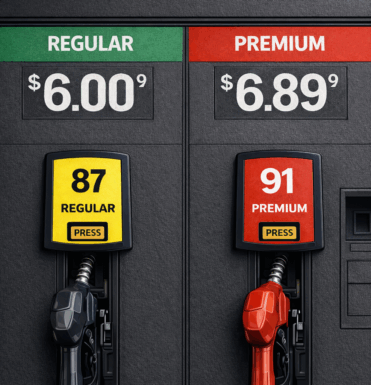
Outraged by $4 Gas, Albany Pushes Policies That Mean $6
New Yorkers could soon be paying $6 a gallon for gas, thanks to Albany’s policy mistakes. The prospect of soaring gas prices comes amid a larger rise in energy costs, accelerated by the growth in data centers and the Iran conflict. Yet $4 -a-gallon gas Read More
Hochul continues to bribe Big Health with reckless Medicaid spending
For the fourth year in a row, has used the word “unsustainable” to describe her own .
Give her credit for honesty — but not sound fiscal management.
Over the four annual budgets on her watch, the state’s share of Medicaid costs has soare Read More