

New York State’s tax revenues have fallen more than $1 billion behind projections since the current state budget was adopted eight months ago.
When the fiscal year starts April 1, it’ll be staring into the gaping maw of at least a $689 million shortfall. Under the circumstances, a new corporate-tax giveaway is the last thing Albany needs.
Gov. Cuomo agrees — at least for now.
Until this week, Cuomo had never seen an entertainment industry subsidy he didn’t like — including a five-year, $2.1 billion extension of the nation’s most generous state firm tax credit, set to expire in 2019.
Monday, however, he vetoed a bill that would have authorized up to $50 million in annual tax credits for music producers and digital-game developers.
The question now is whether New York will finally press “stop” on taxpayer-funded entertainment-industry subsidies. On this, Cuomo’s veto was less encouraging.
His brief veto message didn’t object to the tax credit in principal. Instead, after stressing his continued “support [for] the music and digital gaming industry,” he noted that the Legislature had approved the handout “without accompanying funding.”
Such funding, the message concluded, “must be addressed in the context of annual budget negotiations” — effectively inviting the industry to rewind and replay the credit push next year.
Passed overwhelmingly by both the Assembly and Senate in the waning hours of June, the new music and gaming tax credit would have equaled 25 percent of “below the line” production costs in the New York City metro region, and up to 35 percent of the same costs upstate.
The annual gift was to be capped at $25 million for each of the two credits, or up to $150 million over the next three years. It was modeled on the state’s $420 million a year Film Tax Credit, which is “refundable” to filers whose total tax liability comes to less than the credit amount.
Gifts like this are, to say the least, a very sweet deal — as researchers for Cuomo’s now-defunct tax reform commission pointed out in a devastating (but unpublished) study several years ago.
The study said the film tax credit — 30 percent of costs, plus a 10 percent “labor credit” outside New York City — is so generous it can amount to more than half a production company’s taxable income in a given year.
In 2008 alone, the commission’s researchers found, tax credits awarded to just 31 film producers exceeded the total tax liability of the more than 1,600 film and TV production firms doing business in the state in nine of the previous 10 years.
For a politician, the appeal is obvious: The entertainment industry is glamorous, heavily unionized — and flush with celebrities, producers and investors who know how to reward friendly politicians at campaign time.
Cuomo alone collected almost $900,000 in campaign contributions from film and TV producers during his first term, Bloomberg News reported last year.
Lobbyists for Hollywood have long argued that the credit pays for itself in the form of new jobs and business activity. But, as noted in Cuomo’s tax-reform-commission study, those claims are inflated by the assumption — preposterous on its face — that no movies or TV shows would be made in New York in the absence of the credit.
You can’t blame musicians and gamers for trying to jump on the same gravy train, even if their justification for a new tax credit boiled down to the lame assertion that, in the words of the bill sponsor’s memo, “New York is undoubtedly the home of the most creative individuals in the music industry, and graduates the finest game developers anywhere.”
Substitute “publishing” and “investment bankers” for “music” and “game developers,” and you’ve got an equally strong justification for subsidizing those industries, too.
If there’s a silver lining in New York’s increasingly pinched fiscal outlook, it’s that Cuomo and the Legislature will find it harder to favor corporate welfare over education, transportation and other basic services. Going beyond Cuomo’s veto, it’s time to bring down the curtain on New York’s giveaways to the entertainment industry, once and for all.
You may also like

The fatal flaw in New York’s climate Superfund law
In 2024, the New York state Legislature decided the state needed some money — $75 billion, to be exact — for “comprehensive adaptation to the effects of in New York state.”
The Legislature thought it had found Read More

Long Islanders and Empire Center Debate Homeschooling
Greater Long Island’s recent into the rise of homeschooling sparked quite a debate. Hundreds of readers on Facebook, weighing in on everything from academics and socialization to parental rights, teacher qualifications, a Read More
N.Y. fails education despite spending big
New York’s schools are spending more than ever, but student performance keeps falling.
Unsurprisingly, Empire Center’s latest opinion poll shows with how education is run. They want better results, less spending, and more choice — something th Read More
Long Island schools: Ahead of a very mediocre pack
Long Island may be New York's strongest case that money matters in education — and also its strongest warning that, past a certain point, more money is not the answer.
Long Island is widely regarded as one of New York's better education regions, exce Read More

A Bullying Lawyer Trapped an Innocent Woman in a Five-Year Court Battle – but New York Law can’t Make her Whole
We like to associate the law with justice—protecting the innocent and punishing the wrongdoers. But sometimes our laws punish the innocent and protect the wrongdoers instead.
Dutchess County mom Vika Shock learned this the hard way.
In November 20 Read More

No Energy Price Relief in Hochul’s Budget—So Far
Mrs. Hochul had been warning that the state’s green energy regime, a product of the Climate Leadership Climate Protection Act, needs changes to spare New Yorkers from a self-inflicted surge in energy costs.
Unfortunately, Mrs. Hochul’s 2027 Budget Read More
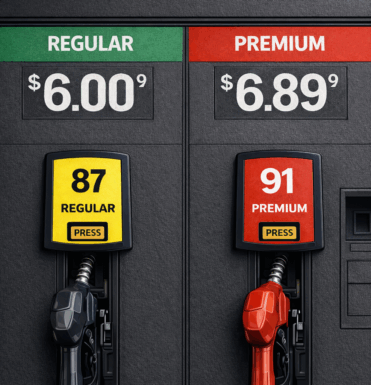
Outraged by $4 Gas, Albany Pushes Policies That Mean $6
New Yorkers could soon be paying $6 a gallon for gas, thanks to Albany’s policy mistakes. The prospect of soaring gas prices comes amid a larger rise in energy costs, accelerated by the growth in data centers and the Iran conflict. Yet $4 -a-gallon gas Read More
Hochul continues to bribe Big Health with reckless Medicaid spending
For the fourth year in a row, has used the word “unsustainable” to describe her own .
Give her credit for honesty — but not sound fiscal management.
Over the four annual budgets on her watch, the state’s share of Medicaid costs has soare Read More