

Famous pretend insurance company AIG, responding to popular demand, has released a list of its major structured-finance counterparties — that is, those banks, municipalities and the like that stood to lose the most if AIG had gone under without massive government support last year. New York State was nowhere near the top of the list, nor were other big New York borrowers like the city, the Port Authority, or the MTA.
States were vulnerable to AIG’s failure because they had signed oxymoronic “guaranteed investment contracts” with the company.
That is, after issuing bonds, states would park the money with AIG, which would “guarantee” a certain return on that investment. Had the feds allowed AIG to go financially bankrupt, states would have been creditors to AIG’s estate for any money owed under such contracts.
California and Virginia had the most to lose, with more than $1 billion each in direct exposure to AIG under the contracts. Hawaii was next, with more than three quarters of a billion at risk.
The Empire State came in at just $210 million. Compare this exposure to that of Goldman Sachs, which stood to lose nearly $13 billion.
It’s good that New York did not risk billions with AIG. Still, though, $210 million is not nothing.
The experience should remind the state that the hefty fees paid to banks and advisers for mysterious financial structures, whether it’s for a “guaranteed return” on a muni-bond issue or a first-loss protection on a public-private partnership venture, aren’t worth it.
Even if structured-finance deals don’t blow up, as AIG’s did, nobody in either the public sector or the private sector seems to understand enough about this stuff to know if his client is getting good value for a taxpayer dollar spent or pledged.
You may also like

New Poll Shows New Yorkers Want Cheaper Energy — RGGI’s Price Record Shows They Aren’t Getting It
Editor's note: Roger Caiazza is an adjunct fellow at the Empire Center. He has a long and deep private industry background in environmental regulatory analysis and compliance. His frequently updated personal blog on New York Read More

New York’s Health Premiums Stayed at the Top in 2025
New Yorkers and their employers paid the highest health premiums in the lower 48 states in 2025, and their costs moved further above the U.S. average, according to recently released federal data.
Read More

NY’s Medicaid Fraud Watchdog Shows Declining Performance
Enforcement by the New York's Office of Medicaid Inspector General has dropped in recent years across a range of benchmarks – a sign that the state's anti-fraud efforts have slackened even as its Medicaid spending soared. Read More

The Attorney General’s MFCU SNAFU
Attorney General Letitia James' latest fight with the Trump administration focuses on New York's Medicaid Fraud Control Unit, a federally funded agency housed in James' office.
On T Read More
Healthcare Revelations in the Enacted Budget Financial Plan
The state financial plan published on June 10 disclosed key information about healthcare revenue and spending that lawmakers had not made public when approving the annual budget two weeks before.
Read More
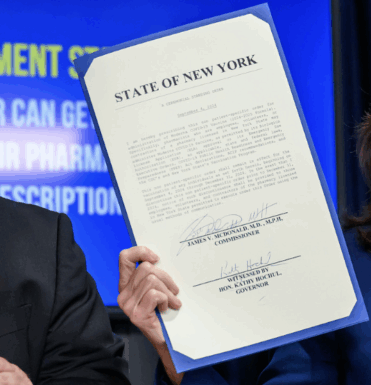
Federal Suit Traces Medicaid Fraud to the Top of NYS Government
The Trump administration's latest salvo against Medicaid fraud takes aim at a different kind of target – two high-ranking New York officials along with a major state contractor.
A Read More

It Is Time to Rethink the Regional Greenhouse Gas Initiative
Before budget negotiations, Gov. Hochul warned that unless New York changes its climate plans, New Yorkers could face a $2.26-per-gallon increase in gasoline prices. The reason is the so-called “cap-and-invest” scheme, under which energy companies wou Read More

Healthcare Highlights in the New State Budget
Governor Hochul's focus on affordability seems to have skipped over the healthcare portions of the new state budget.
The deal finalized May 27 Read More