

SNL Financial has a characteristically solid report out analyzing Wall Street firms’ latest results, which trickled in last week.
One verdict to take away (although the analysts do not directly draw this conclusion): Wall Street could be smaller and more volatile. That’s not a good thing for New York City and State.
First, the bad news. Wall Street’s traditional bread-and-butter — fees from giving advice on mergers & acquisitions and other matters — is suffering.
At JPMorgan Chase, “[a]ll three of the investment banking fee businesses were down year over year, and advisory was also down when compared to the fourth quarter of 2011,” note SNL analysts Joe Mantone and Thomas Mason.
Second, the kinda good news. Mantone and Mason conclude that “the trading businesses from U.S. global investment banks bounced back in the first quarter from an abysmal fourth quarter” last year.
But the kinda good news is actually bad, too.
Giving advice and underwriting bonds is a relatively low-risk business (though not a no-risk business on the latter).
Churning out trading profits is as higher-risk business.
It’s not just the risk of holding assets; it’s the reputational and regulatory risk, too, of having to sell people stuff that may not be in their best interest to buy.
It’s telling that banks are becoming more reliant on this business even as regulators frown upon it.
To wit: the Volcker Rule, a part of Dodd-Frank, is set, in two years, to ban “proprietary” trading — that is, in-house speculation.
So why are banks doing more business that looks sort of like the prop-trading business?
They are desperate for something to do — and also, with interest rates at zero, they don’t have much choice but to do what everyone else is doing.
In the long term, the distractions this business line can cause, when lacking proper management, can drive bread-and-butter advisory clients away.
Yes, it’s hard ever to tell what’s really going on in the banks.
But from the outside, it’s hard to see this resumption of a pre-2008 development as good for New York. Banks are doubling down on a volatile, cyclical profit center even as a more staid part of the industry shrinks.
New York — at least as it is currently configured, to be too dependent on income-tax revenues — has no choice but to go along for the ride.
You may also like

New Poll Shows New Yorkers Want Cheaper Energy — RGGI’s Price Record Shows They Aren’t Getting It
Editor's note: Roger Caiazza is an adjunct fellow at the Empire Center. He has a long and deep private industry background in environmental regulatory analysis and compliance. His frequently updated personal blog on New York Read More

New York’s Health Premiums Stayed at the Top in 2025
New Yorkers and their employers paid the highest health premiums in the lower 48 states in 2025, and their costs moved further above the U.S. average, according to recently released federal data.
Read More

NY’s Medicaid Fraud Watchdog Shows Declining Performance
Enforcement by the New York's Office of Medicaid Inspector General has dropped in recent years across a range of benchmarks – a sign that the state's anti-fraud efforts have slackened even as its Medicaid spending soared. Read More
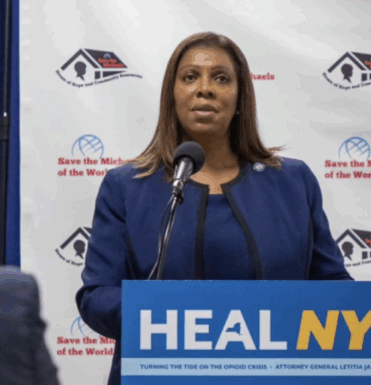
The Attorney General’s MFCU SNAFU
Attorney General Letitia James' latest fight with the Trump administration focuses on New York's Medicaid Fraud Control Unit, a federally funded agency housed in James' office.
On T Read More
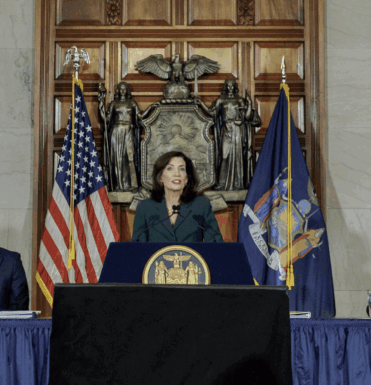
Healthcare Revelations in the Enacted Budget Financial Plan
The state financial plan published on June 10 disclosed key information about healthcare revenue and spending that lawmakers had not made public when approving the annual budget two weeks before.
Read More
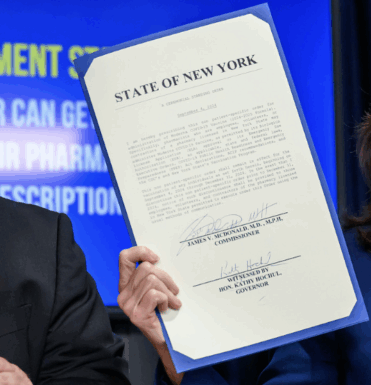
Federal Suit Traces Medicaid Fraud to the Top of NYS Government
The Trump administration's latest salvo against Medicaid fraud takes aim at a different kind of target – two high-ranking New York officials along with a major state contractor.
A Read More

It Is Time to Rethink the Regional Greenhouse Gas Initiative
Before budget negotiations, Gov. Hochul warned that unless New York changes its climate plans, New Yorkers could face a $2.26-per-gallon increase in gasoline prices. The reason is the so-called “cap-and-invest” scheme, under which energy companies wou Read More

Healthcare Highlights in the New State Budget
Governor Hochul's focus on affordability seems to have skipped over the healthcare portions of the new state budget.
The deal finalized May 27 Read More