

 Today’s U.S. Supreme Court ruling in Harris v. Quinn has significant implications for at least 47,000 informal,
 unlicensed private child care providers who have been forced to pay the equivalent of dues to two of New York State’s largest public-sector unions.
In a 5-4 decision, the court said the state of Illinois could not require Medicaid personal home care assistants who choose not to join a state-designated union to pay the equivalent of dues through an agency fee arrangement. Writing for the majority, Justice Samuel Alito said the court’s 1977 ruling in Abood v Detroit Board of Education precedent, which upheld union agency-fee arrangements in the public sector, does not apply to workers who are not “full-fledged public employees.”
The closest New York State counterparts to the Illinois workers are the child care providers first unionized under an executive order issued by then-Gov. Eliot Spitzer in 2007. The providers in question are independent contractors, subsidized by government grants but hired by parents. Some are licensed day-care operators; others are friends or relatives of the low-income working moms whose kids they watch. In recent years, unions across the country have been eying these informal caregiver networks as a new frontier for building membership rolls and political influence.
Under Spitzer’s order, which was subsequently enacted into law by the Legislature in 2010, about 32,000 child care providers in New York City were organized by the United Federation of Teachers (UFT). Another 15,000 providers in the rest of the state are represented by Local 100B of Civil Service Employees Association (CSEA). (The head counts are provided by the unions on their websites; they sum up to less than 60,000 providers that were originally estimated to be affected by the law.)
The state Office of Child and Family Services in January 2012 instructed county welfare agencies to begin deducting union dues of up to $690 per union member from subsidized child care provider payments. An agency fee equivalent to dues is deducted from payments to covered child care providers who refuse to join the unions. In fact, according to this website for child care providers unhappy with the fee arrangements, a majority of the providers never returned ballots in the original union elections, which were conducted by mail.
New York’s law makes it clear that, like the Illinois group affected by today’s Supreme Court ruling, the child care workers roped into UFT and CSEA do not have an “employer-employee relationship” with the state or its subdivisions, and are not entitled to public sector retirement or health benefits, and are not subject to indemnification if sued.
Today’s decision would strongly suggest that the New York agency-fee arrangement for child care providers should also come to an end. Stay tuned.
** PS — New York headed a list of 14 states, plus the District of Columbia, that filed a joint amicus brief in support of Illinois’ position in the Harris case. The brief argued in defense of the states’ power to broadly and “flexibly” apply Abood in the public sector.
You may also like

Hochul’s Energy Infrastructure Plan Gets the Diagnosis Right but Offers No Prescription
Editor’s note: Roger Caiazza is an adjunct fellow at the Empire Center. He has a long and deep private industry background in environmental regulatory analysis and compliance. His frequently updated personal blog on New York State environmental poli Read More
New Poll Shows New Yorkers Want Cheaper Energy — RGGI’s Price Record Shows They Aren’t Getting It
Editor's note: Roger Caiazza is an adjunct fellow at the Empire Center. He has a long and deep private industry background in environmental regulatory analysis and compliance. His frequently updated personal blog on New York Read More

New York’s Health Premiums Stayed at the Top in 2025
New Yorkers and their employers paid the highest health premiums in the lower 48 states in 2025, and their costs moved further above the U.S. average, according to recently released federal data.
Read More

NY’s Medicaid Fraud Watchdog Shows Declining Performance
Enforcement by the New York's Office of Medicaid Inspector General has dropped in recent years across a range of benchmarks – a sign that the state's anti-fraud efforts have slackened even as its Medicaid spending soared. Read More
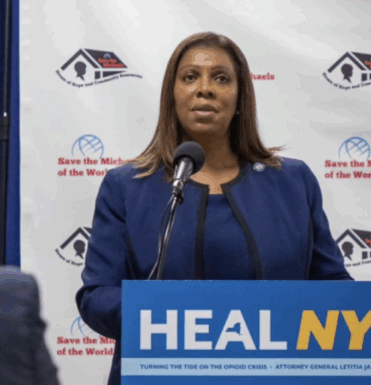
The Attorney General’s MFCU SNAFU
Attorney General Letitia James' latest fight with the Trump administration focuses on New York's Medicaid Fraud Control Unit, a federally funded agency housed in James' office.
On T Read More
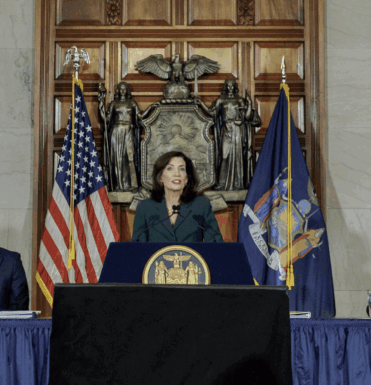
Healthcare Revelations in the Enacted Budget Financial Plan
The state financial plan published on June 10 disclosed key information about healthcare revenue and spending that lawmakers had not made public when approving the annual budget two weeks before.
Read More
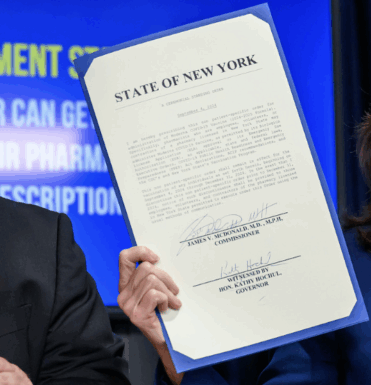
Federal Suit Traces Medicaid Fraud to the Top of NYS Government
The Trump administration's latest salvo against Medicaid fraud takes aim at a different kind of target – two high-ranking New York officials along with a major state contractor.
A Read More

It Is Time to Rethink the Regional Greenhouse Gas Initiative
Before budget negotiations, Gov. Hochul warned that unless New York changes its climate plans, New Yorkers could face a $2.26-per-gallon increase in gasoline prices. The reason is the so-called “cap-and-invest” scheme, under which energy companies wou Read More