

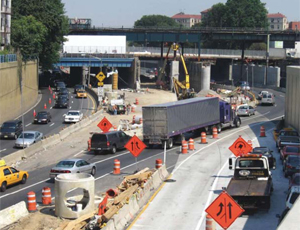
 New York’s local governments are falling behind in “meeting their responsibilities to adequately maintain and improve” their physical infrastructure, says a new report from state Comptroller Thomas DiNapoli’s office.
However, as the report points out, the problem isn’t just a lack of money. For example, in the road and bridge area, construction-related costs are rising in part because of the state’s own longtime insistence on pegging wages paid by all contractors to the supposedly “prevailing” union rate in each region. The money graf from the comptroller’s report (p. 10):
Prevailing Wage Rates – Under New York State Labor Law, contractors and subcontractors must pay the prevailing rate of wage and supplements (fringe benefits) to all workers under a public work contract. Increases in prevailing wage rates impact local governments’ construction costs, as the increases in costs do not necessarily correlate with increases in available funding. Upgrades to waste water and water treatment plants as well as general construction and large paving projects are particularly affected.38 For example, prevailing wage rates in Albany County for Carpenters – Heavy Highway, Electricians, and Plumbers increased 33, 36 and 40 percent, respectively, over an eight year period from 2005 through 2013.
So, even DiNapoli-—a politician warmly embraced by labor unions—is willing to at least implicitly recognize the obvious: local governments could stretch their dollars further if they weren’t stuck with the prevailing wage mandate in its present form.
New York is not unique in having a prevailing law; the federal government still enforces the Depression-era Davis-Bacon Act, after all. However, New York is unique in basing the prevailing wage rate for every trade on union contracts.
Under state law, the prevailing wage for any given trade is based on a union contract that covers at least 30 percent of the workers in the designated trade and locality. The statewide unionization rate is just 24 percent. While that threshold is met in the metropolitan New York area, “it is surely going unmet in many cases” upstate, according to “The Complex Worlds of New York’s Prevailing Wage,” a 2012 report from the Center for Urban Real Estate at Columbia University.
Bottom line: meeting the infrastructure challenge isn’t simply a matter of spending more, but of spending more intelligently.
You may also like

New Poll Shows New Yorkers Want Cheaper Energy — RGGI’s Price Record Shows They Aren’t Getting It
Editor's note: Roger Caiazza is an adjunct fellow at the Empire Center. He has a long and deep private industry background in environmental regulatory analysis and compliance. His frequently updated personal blog on New York Read More

New York’s Health Premiums Stayed at the Top in 2025
New Yorkers and their employers paid the highest health premiums in the lower 48 states in 2025, and their costs moved further above the U.S. average, according to recently released federal data.
Read More

NY’s Medicaid Fraud Watchdog Shows Declining Performance
Enforcement by the New York's Office of Medicaid Inspector General has dropped in recent years across a range of benchmarks – a sign that the state's anti-fraud efforts have slackened even as its Medicaid spending soared. Read More
The Attorney General’s MFCU SNAFU
Attorney General Letitia James' latest fight with the Trump administration focuses on New York's Medicaid Fraud Control Unit, a federally funded agency housed in James' office.
On T Read More
Healthcare Revelations in the Enacted Budget Financial Plan
The state financial plan published on June 10 disclosed key information about healthcare revenue and spending that lawmakers had not made public when approving the annual budget two weeks before.
Read More
Federal Suit Traces Medicaid Fraud to the Top of NYS Government
The Trump administration's latest salvo against Medicaid fraud takes aim at a different kind of target – two high-ranking New York officials along with a major state contractor.
A Read More

It Is Time to Rethink the Regional Greenhouse Gas Initiative
Before budget negotiations, Gov. Hochul warned that unless New York changes its climate plans, New Yorkers could face a $2.26-per-gallon increase in gasoline prices. The reason is the so-called “cap-and-invest” scheme, under which energy companies wou Read More

Healthcare Highlights in the New State Budget
Governor Hochul's focus on affordability seems to have skipped over the healthcare portions of the new state budget.
The deal finalized May 27 Read More