

 State Comptroller Thomas DiNapoli accentuates the negative in a new audit of the state’s Medicaid managed care program, faulting two participating insurers for “wasting millions of state Medicaid dollars.” But he omits two important pieces of context.
First, the comptroller’s report lacks a sense of proportion. After combing Medicaid claims paid by UnitedHealthcare and Amerigroup over a four-year period, DiNapoli’s office said it found “at least $6.6 million in improper and questionable payments to ineligible providers .. including almost $60,000 in payments to pharmacies for medications that were prescribed by deceased doctors.”
Of course, any level of fraud is a bad thing. But the $6 million identified by the audit represents less than one-tenth of 1% of the claims paid by the two companies during the audit period. For comparison, the U.S. General Accounting Office estimates that improper payments accounted for 6.7 percent of nationwide Medicaid spending in 2014.
Are the managed care companies doing a better or worse job at catching fraud than traditional, fee-for-service Medicaid (in which the state directly reimburses providers)? It’s a relevant question the audit does not address. But when The New York Times analyzed traditional Medicaid spending in 2005 – using only a laptop computer and off-the-shelf software – it found evidence of rampant fraud, including $7 million in questionable claims from a single dentist.
Second, the audit fails to clearly explain who suffered the $6 million hit: It was the insurers, not the state.
A great virtue of Medicaid managed care is that it shifts risk and liability from taxpayers to the private sector. The state pays each managed care company a fixed premium per month per enrollee. The company then becomes responsible for paying claims. If the company fails to catch fraud, it eats the loss.
Since the state sets premiums based on how much companies have paid out in the past, the audit raises the concern that unidentified fraud could lead to inflated rates in future years. But that would be true of any fraud detection effort with a success rate less than 100 percent.
Meanwhile, there’s strong evidence that Medicaid managed care is saving taxpayers money overall. During the period covered by the audit, the share of New York Medicaid recipients enrolled in managed care jumped from 68 percent to 76 percent. Over that same period, the state’s per-enrollee spending declined from $10,432 to $8,630.
Despite the relatively small scale of the inappropriate payments – and the lack of direct harm to the state – DiNapoli urges a strong response from the state. His audit calls on the Health Department to require, as part of its contracts with managed care companies, that they hire a minimum number of staff dedicated to fraud recovery.
The audit notes that New Jersey requires plans to employ at least one full-time recovery person for every 60,000 Medicaid recipients enrolled, while the ratios at UnitedHealthcare and Amerigroup were several times lower than that. What the audit does not say is whether the New Jersey rule resulted in more recoveries.
This is one recommendation that the Health Department rejected outright:
“Plans need to have the flexibility to allocate resources to utilize various program integrity tools, including pre-payment and post-payment activities,” the department wrote in its response to the audit. “Plans and other payers have found that preventing inappropriate payments is more cost effective than attempting to recoup inappropriate payments.”
About the Author

You may also like

New York’s Health Premiums Stayed at the Top in 2025
New Yorkers and their employers paid the highest health premiums in the lower 48 states in 2025, and their costs moved further above the U.S. average, according to recently released federal data.
Read More

NY’s Medicaid Fraud Watchdog Shows Declining Performance
Enforcement by the New York's Office of Medicaid Inspector General has dropped in recent years across a range of benchmarks – a sign that the state's anti-fraud efforts have slackened even as its Medicaid spending soared. Read More
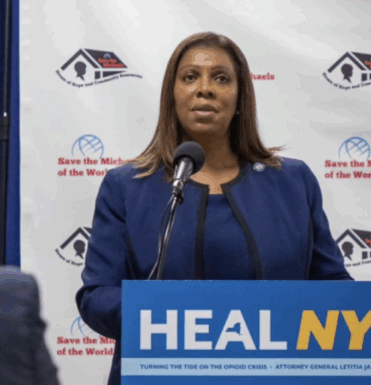
The Attorney General’s MFCU SNAFU
Attorney General Letitia James' latest fight with the Trump administration focuses on New York's Medicaid Fraud Control Unit, a federally funded agency housed in James' office.
On T Read More
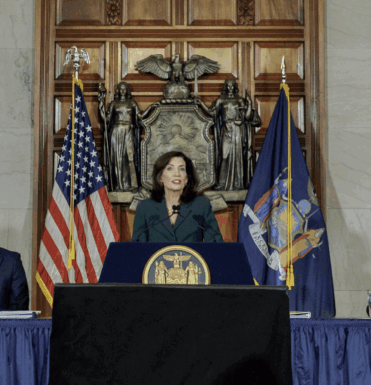
Healthcare Revelations in the Enacted Budget Financial Plan
The state financial plan published on June 10 disclosed key information about healthcare revenue and spending that lawmakers had not made public when approving the annual budget two weeks before.
Read More
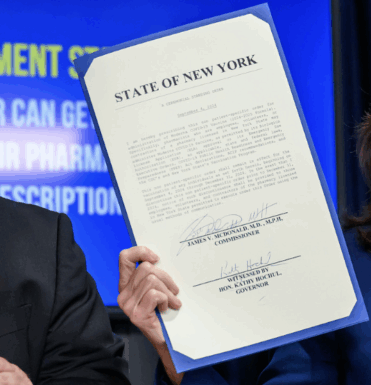
Federal Suit Traces Medicaid Fraud to the Top of NYS Government
The Trump administration's latest salvo against Medicaid fraud takes aim at a different kind of target – two high-ranking New York officials along with a major state contractor.
A Read More

Healthcare Highlights in the New State Budget
Governor Hochul's focus on affordability seems to have skipped over the healthcare portions of the new state budget.
The deal finalized May 27 Read More
Budget Deal Reportedly Earmarks $100M for 1199 and Extends MCO Tax
As Governor Hochul and legislative leaders rush to finalize the overdue state budget, outlines of some healthcare-related deals have begun to emerge from the closed-door negotiations.
Read More

Albany Wavers on Shutting Down a Medicaid Racket
As Washington threatens to crack down on fraud and abuse in New York's Medicaid program, state legislators are doing their best to demonstrate why federal intervention is needed.
A Read More