

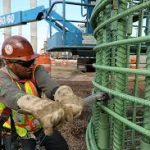
 With time winding down on this year’s legislative session, some state lawmakers are pushing for an expansion of New York’s already costly, union-friendly “prevailing wage” law.
As enforced by the state Labor Department, the law effectively requires contractors on public projects to pay their workers the amounts required by union collective bargaining agreements—including pricey union fringe benefits. This drives up public works building costs by at least 13 to 25 percent, depending on the region, according to a recent Empire Center study. Compounding the problem: adherence to the “wage” standard also effectively requires contractors to conform to union work rules, further sapping productivity in ways that are real but difficult to measure.
A bill introduced this week by state Sen. Diane Savino (D-Staten Island) would significantly extend the state’s prevailing wage requirements to cover all workers employed in “the fabrication and all drafting related to the fabrication of woodwork, cases, cabinets or counters and … of electrical, plumbing, heating, cooling, ventilation or exhaust duct systems, and mechanical insulation solely and specifically designed and engineered for installation in the construction, repair or renovation of a building which is the subject of a contract” for a public works project.
The proposal is a fairly blatant attempt to minimize the cost advantage enjoyed by the largely non-union and “open shop” (mixed union and non-union) contractors who have increasingly relied on off-site fabrication. It also effectively extends the prevailing wage for the first time to what can be most accurately classified as manufacturing work.
Echoing a frequent labor union talking point, Savino’s bill memo says her proposal will ensure that more workers are paid “fair and equitable” wages—implying that non-union wages are unfair and inequitable. The memo adds:
It has become clear over the last several years that some unscrupulous contractors are circumventing the spirit and intent of prevailing wage law.
Translation: more productive and efficient contractors have been underbidding union firms—and saving taxpayer dollars.
Savino’s bill was referred immediately to the powerful Senate Rules Committee, leaving it a step away from a floor vote by the full Senate. An Assembly version of the same measure—sponsored by Assemblyman Peter Abbate, D-Brooklyn—was introduced on May 25 and was referred to the Labor Committee in that house.
A separate bill sponsored by Sen. Terence Murphy (R-Yorktown Heights)—with 11 co-sponsors including Phil Boyle, the chair of the Senate’s Commerce, Economic Development, and Small Business Committee—would expand the union-pay mandate to all projects “paid for in whole or in part out of public funds,” including those receiving tax-exempt financing through industrial development authorities. That bill was recently reported from the Senate Labor Committee to the Finance Committee, another spot from which it could be sprung to the floor. The Assembly version at last notice had come to rest in the Codes Committee.
Both bills appear to be high priorities of New York’s shrinking but politically influential construction unions, which desperately need to keep employer payments flowing into their depleted pension and health benefit welfare funds, as our recent study explains. Unfortunately, this also amounts to a costly backdoor bailout funded by taxpayers.
You may also like

New Poll Shows New Yorkers Want Cheaper Energy — RGGI’s Price Record Shows They Aren’t Getting It
Editor's note: Roger Caiazza is an adjunct fellow at the Empire Center. He has a long and deep private industry background in environmental regulatory analysis and compliance. His frequently updated personal blog on New York Read More

New York’s Health Premiums Stayed at the Top in 2025
New Yorkers and their employers paid the highest health premiums in the lower 48 states in 2025, and their costs moved further above the U.S. average, according to recently released federal data.
Read More

NY’s Medicaid Fraud Watchdog Shows Declining Performance
Enforcement by the New York's Office of Medicaid Inspector General has dropped in recent years across a range of benchmarks – a sign that the state's anti-fraud efforts have slackened even as its Medicaid spending soared. Read More
The Attorney General’s MFCU SNAFU
Attorney General Letitia James' latest fight with the Trump administration focuses on New York's Medicaid Fraud Control Unit, a federally funded agency housed in James' office.
On T Read More
Healthcare Revelations in the Enacted Budget Financial Plan
The state financial plan published on June 10 disclosed key information about healthcare revenue and spending that lawmakers had not made public when approving the annual budget two weeks before.
Read More
Federal Suit Traces Medicaid Fraud to the Top of NYS Government
The Trump administration's latest salvo against Medicaid fraud takes aim at a different kind of target – two high-ranking New York officials along with a major state contractor.
A Read More

It Is Time to Rethink the Regional Greenhouse Gas Initiative
Before budget negotiations, Gov. Hochul warned that unless New York changes its climate plans, New Yorkers could face a $2.26-per-gallon increase in gasoline prices. The reason is the so-called “cap-and-invest” scheme, under which energy companies wou Read More

Healthcare Highlights in the New State Budget
Governor Hochul's focus on affordability seems to have skipped over the healthcare portions of the new state budget.
The deal finalized May 27 Read More