

Last April, lawyers for private kindergarten through grade 12 schools found themselves defending, before a state trial-court judge, private and religious schools’ right to operate. The lawyers, representing Jewish, Catholic and nonsectarian independent schools, were challenging sweeping new State Education Department edicts that would effectively force private schools to perform as de facto public schools.
The department’s new mandate would require local school district boards of education to oversee and inspect most private and parochial schools within their respective district boundaries, using undefined “objective criteria” to determine compliance with the state law that nonpublic schools must provide “substantially equivalent” instruction to their students.
Lack of compliance could mean closure. Public school districts, then, would become the arbiters of whether their competitors — private and religious schools — can remain open, a blatant conflict of interest.
The SED initially imposed these unprecedented mandates on private schools as “guidance” — that is, as a series of bureaucratic memoranda and checklists. The state Legislature passed no law. But the Board of Regents later rubber-stamped new regulations from the department.
If the department succeeds in this unprecedented attempt to control nonpublic education, it will virtually eliminate what makes private and independent schools different, and it will diminish First Amendment freedoms for hundreds of thousands of families, particularly regarding the free exercise of religion.
This new crisis for private schools in New York originates with former state Education Commissioner MaryEllen Elia, who resigned in August. Beginning in late 2017, with no direction from the Regents, Elia began an effort to redefine the substantially equivalent provision and require ongoing and regularly scheduled school-district inspections of private and religious schools.
The new policy came amid complaints that some yeshivas were failing to provide students with sufficient secular education.
The SED maintains that state law authorizes the proposed regulations. In fact, nothing in the law mandates or implies that private schools must conform to public school standards, much less be subject to regular oversight inspections. It’s hard to overstate the extent of this departure.
“If there are legitimate concerns about the academic performance of a school or set of schools, the focus should remain there, not on the vast array of religious and independent schools that are meeting academic expectations,” says James Cultrara, of the New York State Council of Catholic School Superintendents. “For decades, academic concerns have been handled on a case-by-case basis. A new regulatory and oversight regime is simply unnecessary.”
Not only does the private school community oppose the state’s unprecedented, extra-legal effort to control it, but the state school boards association, which represents most of New York’s 700 boards of education, also objects to what amounts to an unfunded mandate on them to conduct the inspections of private schools.
Though students in private and parochial schools accrue a modest taxpayer expense, the current enrollment of approximately 443,000 students actually amounts to a net annual savings of billions of dollars to local property- and state-income taxpayers, since it costs approximately $25,000 a year per pupil to educate kids in the public schools, far more than what the state shells out for private-school children.
Sustaining an economically viable private and religious-school sector thus not only serves the state’s compelling interest in educating children but also benefits taxpayers.
New York’s distinguished history of private and religious education stands today at a crossroads. With the departure of Elia, who led the effort to control nonpublic education, the Regents should jettison the proposed redefinition of “substantially equivalent.” And if the Regents won’t step in, then the state Legislature and the courts should intervene.
Above all, lawmakers and policymakers should first do no harm.
That begins with the Regents junking redefined substantially equivalent regulations for private and parochial school instruction — especially the mandate for school districts to determine compliance.
Private and religious schools will remain at grave risk until this essential step is taken.
Adapted from City Journal.
About the Author

You may also like

The fatal flaw in New York’s climate Superfund law
In 2024, the New York state Legislature decided the state needed some money — $75 billion, to be exact — for “comprehensive adaptation to the effects of in New York state.”
The Legislature thought it had found Read More

Long Islanders and Empire Center Debate Homeschooling
Greater Long Island’s recent into the rise of homeschooling sparked quite a debate. Hundreds of readers on Facebook, weighing in on everything from academics and socialization to parental rights, teacher qualifications, a Read More
N.Y. fails education despite spending big
New York’s schools are spending more than ever, but student performance keeps falling.
Unsurprisingly, Empire Center’s latest opinion poll shows with how education is run. They want better results, less spending, and more choice — something th Read More
Long Island schools: Ahead of a very mediocre pack
Long Island may be New York's strongest case that money matters in education — and also its strongest warning that, past a certain point, more money is not the answer.
Long Island is widely regarded as one of New York's better education regions, exce Read More

A Bullying Lawyer Trapped an Innocent Woman in a Five-Year Court Battle – but New York Law can’t Make her Whole
We like to associate the law with justice—protecting the innocent and punishing the wrongdoers. But sometimes our laws punish the innocent and protect the wrongdoers instead.
Dutchess County mom Vika Shock learned this the hard way.
In November 20 Read More

No Energy Price Relief in Hochul’s Budget—So Far
Mrs. Hochul had been warning that the state’s green energy regime, a product of the Climate Leadership Climate Protection Act, needs changes to spare New Yorkers from a self-inflicted surge in energy costs.
Unfortunately, Mrs. Hochul’s 2027 Budget Read More
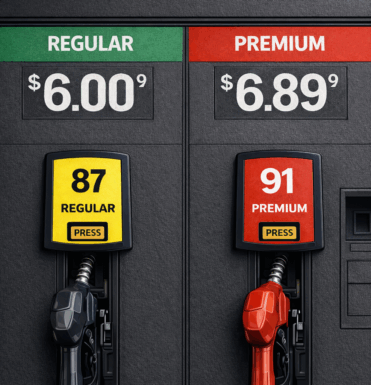
Outraged by $4 Gas, Albany Pushes Policies That Mean $6
New Yorkers could soon be paying $6 a gallon for gas, thanks to Albany’s policy mistakes. The prospect of soaring gas prices comes amid a larger rise in energy costs, accelerated by the growth in data centers and the Iran conflict. Yet $4 -a-gallon gas Read More
Hochul continues to bribe Big Health with reckless Medicaid spending
For the fourth year in a row, has used the word “unsustainable” to describe her own .
Give her credit for honesty — but not sound fiscal management.
Over the four annual budgets on her watch, the state’s share of Medicaid costs has soare Read More