

New York school districts are missing out on non-taxpayer revenue due to antiquated legal restrictions, according to a new report from the Empire Center for Public Policy.
Selling advertising and naming rights on school properties is widely seen as prohibited in New York, but experiences in other states suggest that New York’s schools are missing out on millions of dollars that could be used to sustain public school programs and mitigate property tax burdens.
Schools in Massachusetts, New Jersey, Pennsylvania and a number of other states have used funds from naming rights on school facilities and advertising to fund building renovations, athletic and music programs, extracurricular activities and more.
By contrast, the New York State Constitution has long been interpreted as prohibiting such naming rights and commercial advertising, absent authorization by the Legislature. State lawmakers have not permitted school districts access to such non-tax revenue sources, even as homeowners continue to pay some of the nation’s highest property tax burdens.
Recommendations on how to take advantage of this opportunity can be found in Commercial Cash: How NY Schools Can Raise Extra Money Without Raising Taxes, an issue brief by Peter Murphy, the Empire Center’s senior fellow for education policy. The report explores why commercialization on school property has been historically prohibited and what the Legislature can do to enable school districts to access these new sources of revenue.
The Empire Center, based in Albany, is an independent, non-partisan, not-for-profit think tank dedicated to promoting policies to make New York a better place to live, work and raise a family.
You may also like
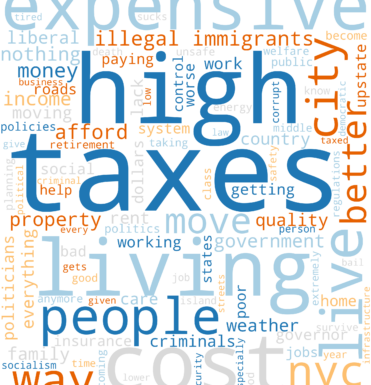
Taxes, the Cost of Living, and Feeling Ignored: Why New Yorkers Are Thinking of Leaving
FOR IMMEDIATE RELEASE ALBANY, N.Y. - New Yorkers across the political spectrum are considering leaving the state. A new finds that Republicans and independent voters most often cite taxes as the reason, while Dem Read More
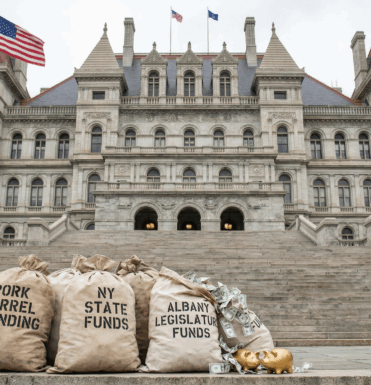
Albany Steers Nearly $100 Million in 2026 Pork Barrel Spending
Albany steered $97.2 million to 206 local projects during the first half of 2026 in the newest batch of state discretionary grants, according to. The new tranche is the latest addition to the pork-barrel grant database the Empire Center h Read More

New York’s Electricity Prices Fifth Highest in the Country
FOR IMMEDIATE RELEASE
ALBANY, N.Y. — Empire Center’s shows New York households paid the fifth‑highest residential electricity prices in the country in June 2026, trailing only Hawaii, California Read More

Nine Millionaires among NY’s Public Authorities in 2025
Nine millionaires, all healthcare executives, emerged among the 88,228 New York public authority employees, according to, the Empire Center’s transparency website.
The data includes payroll information from 385 different agen Read More
132 NYSLRS Retirees Receive Pensions Over $200K in FY2026
A total of 132 retirees from the New York State and Local Retirement System (NYSLRS) were eligible to collect $200,000 or more in pensions during the 2026 fiscal year, according to , the Empire Center’s government transparency website.
Among the 132 Read More
Empire Center Poll: Just 4 Percent Approve of New York’s Education System
ALBANY, N.Y. — New Yorkers gave the state’s education system a sweeping vote of no confidence: 47 percent said the state should improve student performance, 41 percent said it should improve performance while spending less, and only 4 Read More
New York’s electricity prices climb to third highest in the U.S.
FOR IMMEDIATE RELEASE
ALBANY, N.Y. — Empire Center’s shows New York households paid the third-highest residential electricity prices in the country in May 2026, trailing only Hawaii and California.
The latest U.S. Energy Information Administra Read More
Port Authority Payroll Passes $1.2B as 20 Employees Collect $400k+
Twenty Port Authority of New York and New Jersey (PANYNJ) employees collected more than $400,000 each in total pay last year, while average pay agencywide rose three percent, according to , the Empire Center’s government transparency website.
The Por Read More