

The indictment of New York’s top construction-union official on federal corruption charges this month raises a big question: If businesses are paying bribes to avoid having to work with certain construction unions, why does Gov. Cuomo insist the state keep doing it?
James Cahill, who heads the New York State Building and Construction Trades Council, was charged by the US Attorney’s Office for the Southern District of New York with racketeering, fraud and bribery. The indictment, which also names 11 other building-trades-union officials, alleges Cahill took bribes in return for letting a business avoid hiring plumbers belonging to Cahill’s former union.
As interpreted and enforced by the state Labor Department, New York’s “prevailing wage” law for public-works projects mandates that contractors on taxpayer-funded jobs adhere to unions’ contractual wage, benefits, work rules and manning levels. That gives firms using union labor a significant boost, since their open-shop competitors don’t have the advantage of lower labor costs.
The problem with forcing union terms on contractors is summed up in a remark Cahill allegedly made to an unnamed firm (with an expletive deleted): “If you become union, you’ll have 12 guys on your back.”
Federal prosecutors effectively are alleging that the unnamed firm, referred to in the indictment as “Employer 1,” found union contracts so onerous that it was less expensive to simply bribe Cahill and other union leaders to use non-union labor. The indictment quotes Cahill as implying that Employer 1 wasn’t alone in making such arrangements.
But there’s a bigger scandal afoot.
Construction firms that hire from union halls are at a disadvantage both in terms of costs and flexibility. Union contracts typically demand higher compensation packages to backfill underfunded union pension and benefit funds, and employers get stuck using archaic union work rules that, for instance, prevent a carpenter from performing a duty reserved for a painter or an electrician.
That has led trade unions and unionized construction companies to press state officials for special rules to give them a leg up. And they’ve found a welcome audience in Gov. Cuomo, who described Cahill in 2017 as “a good friend to me and my entire family for so long.”
The governor has done backflips to steer government construction work to firms that hire Cahill’s members (who make up less than 30 percent of the state’s construction workers). In 2016 he went so far as to vow “every project we build is going to be built with organized labor — every project.”
The Cuomo administration routinely requires contractors to sign a Project Labor Agreement (PLA) — a contract with local trade unions that typically effectively restricts or bars non-union workers from a construction project. The state’s own data have shown time and again that forcing bidders to sign PLAs decreases the number of eligible bidders and increases costs.
State law since the 1990s has allowed government agencies to require a PLA if they can demonstrate, albeit through dubious calculations and assumptions, that it furthers the public interest. But Cuomo has often ignored the law and required PLAs even when the state couldn’t meet its own weak standard.
His administration in 2018, for instance, illegally required offshore wind developers to sign deals with downstate construction unions as a condition of getting multibillion-dollar awards for state subsidies. Years earlier, state officials illegally required contractors building what’s now the SolarCity factory in Buffalo to do the same.
Just this week, Cuomo-appointed regulators endorsed labor agreements on renewable-energy projects, all but guaranteeing that New Yorkers will face higher electricity prices as a result of increased construction costs.
The state’s deepening fiscal crisis makes this a perfect time for lawmakers to look at the motivations, methods and costs behind the favors that the Cuomo administration keeps doing for Cahill and his construction unions.
“What I love about Jimmy,” an alleged co-conspirator is quoted as saying, is that “he takes care of his friends.”
© 2020 New York Post
About the Author

You may also like

The fatal flaw in New York’s climate Superfund law
In 2024, the New York state Legislature decided the state needed some money — $75 billion, to be exact — for “comprehensive adaptation to the effects of in New York state.”
The Legislature thought it had found Read More

Long Islanders and Empire Center Debate Homeschooling
Greater Long Island’s recent into the rise of homeschooling sparked quite a debate. Hundreds of readers on Facebook, weighing in on everything from academics and socialization to parental rights, teacher qualifications, a Read More
N.Y. fails education despite spending big
New York’s schools are spending more than ever, but student performance keeps falling.
Unsurprisingly, Empire Center’s latest opinion poll shows with how education is run. They want better results, less spending, and more choice — something th Read More
Long Island schools: Ahead of a very mediocre pack
Long Island may be New York's strongest case that money matters in education — and also its strongest warning that, past a certain point, more money is not the answer.
Long Island is widely regarded as one of New York's better education regions, exce Read More

A Bullying Lawyer Trapped an Innocent Woman in a Five-Year Court Battle – but New York Law can’t Make her Whole
We like to associate the law with justice—protecting the innocent and punishing the wrongdoers. But sometimes our laws punish the innocent and protect the wrongdoers instead.
Dutchess County mom Vika Shock learned this the hard way.
In November 20 Read More

No Energy Price Relief in Hochul’s Budget—So Far
Mrs. Hochul had been warning that the state’s green energy regime, a product of the Climate Leadership Climate Protection Act, needs changes to spare New Yorkers from a self-inflicted surge in energy costs.
Unfortunately, Mrs. Hochul’s 2027 Budget Read More
Outraged by $4 Gas, Albany Pushes Policies That Mean $6
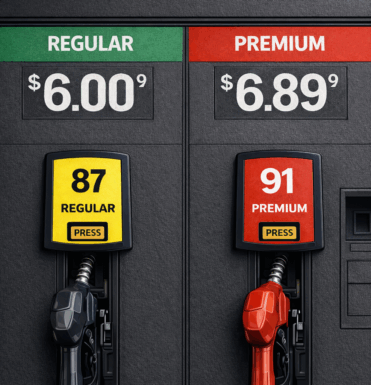
New Yorkers could soon be paying $6 a gallon for gas, thanks to Albany’s policy mistakes. The prospect of soaring gas prices comes amid a larger rise in energy costs, accelerated by the growth in data centers and the Iran conflict. Yet $4 -a-gallon gas Read More
Hochul continues to bribe Big Health with reckless Medicaid spending
For the fourth year in a row, has used the word “unsustainable” to describe her own .
Give her credit for honesty — but not sound fiscal management.
Over the four annual budgets on her watch, the state’s share of Medicaid costs has soare Read More