

In response to Governor Hochul’s State of the State address and policy book, Empire Center experts issued the following reactions:
“There was a big mismatch between Governor Hochul’s emphasis on affordability and the substance of the speech. State government can improve affordability by making it less costly to provide goods and services and by fostering a better business climate. But the governor didn’t lay out a plan for either. It took New York almost four years to recover its job losses from COVID, and Albany’s self-inflicted obstacles were to blame. The redistribution strategy laid out by Governor Hochul today is a plan to make elected officials feel better about the problems they’re still refusing to confront.”
—Ken Girardin, research director
“For all of her talk about affordability, the governor made almost no mention of skyrocketing health-care costs that are a growing burden for every consumer, employer and taxpayer in the state. New Yorkers pay some of the highest insurance premiums in the U.S., largely because of excessive taxation and regulation by Albany. They also face spiraling costs for the state-run Medicaid system, which is riddled with waste and corruption. Meanwhile, too many of their hospitals score near the bottom for quality of care. While her proposals to strengthen mental health care were welcome, Hochul’s larger health-care agenda was glaringly incomplete.”
—Bill Hammond, senior fellow
“A governor interested in affordability ought to be interested in how New Yorkers can pay to live here without government handouts. But this year Governor Hochul barely paid lip service to the barriers Albany places on New Yorkers entering the workforce. And Hochul’s commitment to greater government transparency could not warrant a passing mention this year despite her promises when she took office.”
—Cam Macdonald, adjunct fellow
About the Author

You may also like

The fatal flaw in New York’s climate Superfund law
In 2024, the New York state Legislature decided the state needed some money — $75 billion, to be exact — for “comprehensive adaptation to the effects of in New York state.”
The Legislature thought it had found Read More

Long Islanders and Empire Center Debate Homeschooling
Greater Long Island’s recent into the rise of homeschooling sparked quite a debate. Hundreds of readers on Facebook, weighing in on everything from academics and socialization to parental rights, teacher qualifications, a Read More
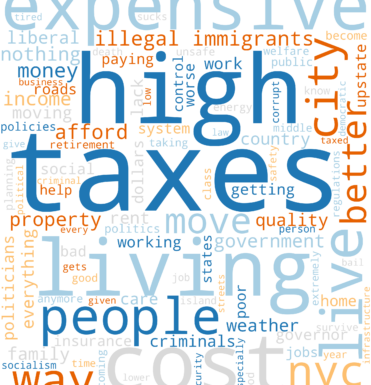
Taxes, the Cost of Living, and Feeling Ignored: Why New Yorkers Are Thinking of Leaving
FOR IMMEDIATE RELEASE ALBANY, N.Y. - New Yorkers across the political spectrum are considering leaving the state. A new finds that Republicans and independent voters most often cite taxes as the reason, while Dem Read More
Leaving New York
Executive Summary
The desire to leave New York is strong and cuts across every demographic group measured in the survey. One-third of New Yorkers have considered leaving the state within the next five years, while another third know some Read More
N.Y. fails education despite spending big
New York’s schools are spending more than ever, but student performance keeps falling.
Unsurprisingly, Empire Center’s latest opinion poll shows with how education is run. They want better results, less spending, and more choice — something th Read More
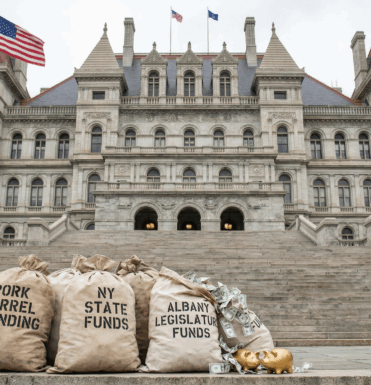
Albany Steers Nearly $100 Million in 2026 Pork Barrel Spending
Albany steered $97.2 million to 206 local projects during the first half of 2026 in the newest batch of state discretionary grants, according to. The new tranche is the latest addition to the pork-barrel grant database the Empire Center h Read More

New York’s Electricity Prices Fifth Highest in the Country
FOR IMMEDIATE RELEASE
ALBANY, N.Y. — Empire Center’s shows New York households paid the fifth‑highest residential electricity prices in the country in June 2026, trailing only Hawaii, California Read More
New Poll Shows New Yorkers Want Cheaper Energy — RGGI’s Price Record Shows They Aren’t Getting It
Editor's note: Roger Caiazza is an adjunct fellow at the Empire Center. He has a long and deep private industry background in environmental regulatory analysis and compliance. His frequently updated personal blog on New York Read More