

As Governor Spitzer plans to take on the problem of rocketing Medicaid spending on the elderly, he needs to get his focus right.
In his recent State of the State address, Mr. Spitzer spoke of shifting spending away from expensive institutional care to community and home-based alternatives “so seniors can have the care they want at a price they can afford.” The real challenge for the new governor is to provide seniors with the care they need at a price all New York tax payers can afford.
In 2004, New York’s Medicaid spending per elderly recipient was nearly two-and-a-half times the average for other states. That amounted to $5.6 billion in added Medicaid costs for New York — roughly 20 times the amount the state expects to save by implementing the Berger Commission’s recent recommendations to close and consolidate some health care facilities. In other words, if we reduced Medicaid costs, we conceivably might not have to close facilities.
At almost $43,000 per elderly nursing-home resident, the state’s Medicaid expenditures on institutional care are 74% above average. But our home-care expenditures are even higher — more than double the average. Of 39 states reporting in 2004, New York had 10% of the elderly Medicaid recipients yet accounted for roughly 57% of all Medicaid home health care and 39% of all personal-care spending in the country.
Elderly Medicaid recipients in New York use hospital inpatient services at one-and-a-half times the rate for other states and three-and-a-half-times the cost per patient. The utilization rates for personal care — assistance for daily activities such as bathing — are similarly out of line with the norm for other states.
New York’s costs aren’t just high. They also have been growing faster than average. In the other 38 states that reported, Medicaid spending per elderly recipient increased by just 9% between 1999 and 2004, less than the rate of inflation of 14%. But in New York, these costs increased by 55% — more than six times faster.
The other states had a real return on their home-health investment, but not New York. During the same five-year period, the other states added more than a half-million seniors to Medicaid rolls and increased home-health and personal-care spending in the aggregate by $1.4 billion, but reduced by an aggregate 32,000 the number of elderly in nursing homes financed by Medicaid. In contrast, in New York, home-health and personal-care Medicaid spending surged an additional $788 million, yet 8,000 more seniors in nursing homes had their care paid by Medicaid, with a net increase of 27,000 seniors in the state Medicaid program.
It’s noteworthy that New York’s pattern of health care utilization in Medicaid is not replicated in the federal Medicare program, which covers all seniors. New Yorkers on Medicare use inpatient, outpatient, nursing-home, physician, and home-health services at roughly the same, or in some cases lower, rate as the averages for other states. We need to find out why this is the case and determine if there are quality control measures in Medicare that could be applied to the Medicaid program.
The time to confront the challenge of Medicaid and the elderly is now. The Census Bureau projects that the number of New Yorkers over age 65 will increase by 454,000 by 2015. During this period, if there is no change in the current mix of Medicaid services and utilization, and assuming modest annual spending increases per recipient, the state’s Medicaid spending on the elderly will rise by a whopping $8 billion, or 82%.
As policymakers look to “right-size” Medicaid, they should focus on ensuring appropriate access to Medicaid-financed services. They should not just close programs and facilities and limit access for all elderly, as all elderly are not overusing health care services.
Medicaid, for example, should not pay for nursing-home care without an independent assessment that a substantial need for such care exists.
New York also should not invest more in home-health and personal-care spending without ensuring an appropriate level of need and proof that it is diverting or delaying institutional care. And the state should investigate why its seniors on Medicaid are going to the hospital more and more, whereas in other states, seniors are going less and less.
New York Medicaid needs reform. Seniors should receive those Medicaid services that are medically necessary and independently reviewed, not just those they “want.” It is to be hoped that Governor Spitzer’s soon-to-be-released budget will take on this challenge.
Read article at NYSun
About the Author

You may also like

The fatal flaw in New York’s climate Superfund law
In 2024, the New York state Legislature decided the state needed some money — $75 billion, to be exact — for “comprehensive adaptation to the effects of in New York state.”
The Legislature thought it had found Read More

Long Islanders and Empire Center Debate Homeschooling
Greater Long Island’s recent into the rise of homeschooling sparked quite a debate. Hundreds of readers on Facebook, weighing in on everything from academics and socialization to parental rights, teacher qualifications, a Read More
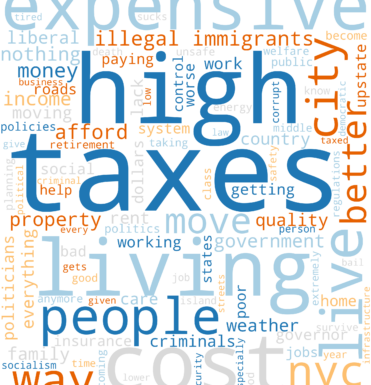
Taxes, the Cost of Living, and Feeling Ignored: Why New Yorkers Are Thinking of Leaving
FOR IMMEDIATE RELEASE ALBANY, N.Y. - New Yorkers across the political spectrum are considering leaving the state. A new finds that Republicans and independent voters most often cite taxes as the reason, while Dem Read More
Leaving New York
Executive Summary
The desire to leave New York is strong and cuts across every demographic group measured in the survey. One-third of New Yorkers have considered leaving the state within the next five years, while another third know some Read More
N.Y. fails education despite spending big
New York’s schools are spending more than ever, but student performance keeps falling.
Unsurprisingly, Empire Center’s latest opinion poll shows with how education is run. They want better results, less spending, and more choice — something th Read More
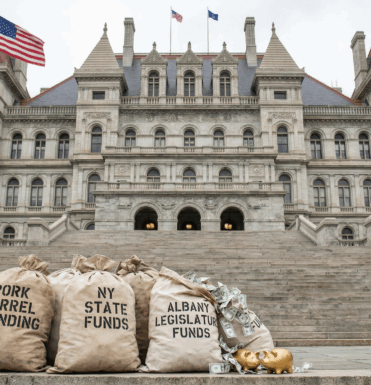
Albany Steers Nearly $100 Million in 2026 Pork Barrel Spending
Albany steered $97.2 million to 206 local projects during the first half of 2026 in the newest batch of state discretionary grants, according to. The new tranche is the latest addition to the pork-barrel grant database the Empire Center h Read More

New York’s Electricity Prices Fifth Highest in the Country
FOR IMMEDIATE RELEASE
ALBANY, N.Y. — Empire Center’s shows New York households paid the fifth‑highest residential electricity prices in the country in June 2026, trailing only Hawaii, California Read More
New Poll Shows New Yorkers Want Cheaper Energy — RGGI’s Price Record Shows They Aren’t Getting It
Editor's note: Roger Caiazza is an adjunct fellow at the Empire Center. He has a long and deep private industry background in environmental regulatory analysis and compliance. His frequently updated personal blog on New York Read More