

It’s a pity New York cannot power its economy on hubris, but state officials this week gave it a try.
The “Future Energy Economy Summit” convened in Syracuse by Gov. Hochul brought together many of the same groups and characters who have shaped New York’s current energy policy — and somehow expected something different out of them.
Helming the summit was Richard Kauffman, New York’s “energy czar,” who for almost a decade has played a major role both in setting New York energy policy and working with companies in the energy sector.
Kauffman is hardly unique in this respect: If anything, he’s the embodiment of New York’s energy policy, which for decades has increasingly seen the political class imposing its preferences — sometimes quite suddenly, and sometimes quite lucratively — with little regard for how their whims translated into higher costs or reduced reliability for families and businesses.
Albany turned seemingly on a dime in 2016, going from encouraging the use of natural gas to blockading projects to bring natural gas to New York or New England.
The switch left the Northeast more reliant on older power plants and dirtier fuels while preventing customers from getting cleaner-burning fuel.
State officials soon after bullied Indian Point, a profitable nuclear plant that was generating close to a quarter of downstate’s electricity, to shut down.
Then they pressed ahead with costly plans to build wind turbines off Long Island, allowing the tiny roster of eligible developers to essentially name their price — because the rushed process left few companies able to bid.
These policies pushed up both costs and emissions, but they brought political windfalls: Environmentalists celebrated Indian Point’s closure, and inefficient construction unions cheered when the state effectively banned non-unionized construction firms from working on the offshore projects.
And Hamptonites breathed a sigh of relief as the federal government — at New York’s urging — quietly excluded their viewshed from the areas eligible for offshore wind development.
Albany took things to a more extreme level in 2019 when Gov. Andrew Cuomo signed the Climate Leadership and Community Protection Act.
The law went far beyond setting targets for reducing greenhouse gas emissions and increasing renewable energy generation.
It imposed arbitrary, mandatory levels for solar, offshore wind and energy storage projects — while excluding more reliable hydroelectric and nuclear generation from that same public funding.
Each of these constraints made it more expensive, and less practical, for the state to hit its own greenhouse gas goals.
Albany took some regulatory liberties to make one particular hydroelectric project, the Champlain Hudson Power Express power line from Quebec to New York City, eligible for subsides.
But good luck getting anyone in the Hochul administration to explain why electricity from Canadian hydroelectric dams shouldn’t count as renewable as far south as Yonkers, but magically earns that distinction when the electrons reach The Bronx.
As to nuclear, the summit cracked the door to the possibility that New York might at some point, in some circumstances, allow companies to build new nuclear reactors — something that’s outright illegal on Long Island at present.
Nuclear power’s very consideration, almost as an act of desperation, reflects how badly Albany has micromanaged the state’s energy picture.
Climate activists blame the pandemic for the fact that New York’s emissions have changed little in the recent years, but the state had already set itself up for a mess by focusing more on what the electric grid should look like, and not enough on how it could be allowed to evolve. (Replacing a nuclear power plant with gas turbines didn’t help).
Officials made unrealistic assumptions that interest rates would remain low, making wind and solar projects appear cheaper to finance.
They were indifferent to the federal government’s century-old prohibition on using foreign ships and crews on American projects, which made offshore wind efforts needlessly more expensive.
And now they act surprised when the price tag of backing up those wind and solar projects with battery storage registers north of $1 trillion — for New York alone.
After gorging themselves on upstate Reisling and PowerPoints feting the vision of the state’s political class, those who gathered in Syracuse would do well to ask whether the answers to the state’s energy problems lie in no longer believing that its leaders have any clue to what those answers are.
About the Author

You may also like

The fatal flaw in New York’s climate Superfund law
In 2024, the New York state Legislature decided the state needed some money — $75 billion, to be exact — for “comprehensive adaptation to the effects of in New York state.”
The Legislature thought it had found Read More

Long Islanders and Empire Center Debate Homeschooling
Greater Long Island’s recent into the rise of homeschooling sparked quite a debate. Hundreds of readers on Facebook, weighing in on everything from academics and socialization to parental rights, teacher qualifications, a Read More
N.Y. fails education despite spending big
New York’s schools are spending more than ever, but student performance keeps falling.
Unsurprisingly, Empire Center’s latest opinion poll shows with how education is run. They want better results, less spending, and more choice — something th Read More
Long Island schools: Ahead of a very mediocre pack
Long Island may be New York's strongest case that money matters in education — and also its strongest warning that, past a certain point, more money is not the answer.
Long Island is widely regarded as one of New York's better education regions, exce Read More

A Bullying Lawyer Trapped an Innocent Woman in a Five-Year Court Battle – but New York Law can’t Make her Whole
We like to associate the law with justice—protecting the innocent and punishing the wrongdoers. But sometimes our laws punish the innocent and protect the wrongdoers instead.
Dutchess County mom Vika Shock learned this the hard way.
In November 20 Read More

No Energy Price Relief in Hochul’s Budget—So Far
Mrs. Hochul had been warning that the state’s green energy regime, a product of the Climate Leadership Climate Protection Act, needs changes to spare New Yorkers from a self-inflicted surge in energy costs.
Unfortunately, Mrs. Hochul’s 2027 Budget Read More
Outraged by $4 Gas, Albany Pushes Policies That Mean $6
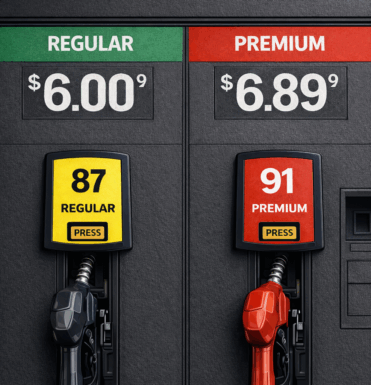
New Yorkers could soon be paying $6 a gallon for gas, thanks to Albany’s policy mistakes. The prospect of soaring gas prices comes amid a larger rise in energy costs, accelerated by the growth in data centers and the Iran conflict. Yet $4 -a-gallon gas Read More
Hochul continues to bribe Big Health with reckless Medicaid spending
For the fourth year in a row, has used the word “unsustainable” to describe her own .
Give her credit for honesty — but not sound fiscal management.
Over the four annual budgets on her watch, the state’s share of Medicaid costs has soare Read More