

Although Governor Hochul said last week that the current trajectory of Medicaid spending is “not sustainable,” the upward trend is even steeper than she and her budget director have acknowledged.
Hochul and Budget Director Blake Washington, in their public comments, both gave $35.4 billion as the proposed state share of Medicaid for fiscal 2026. They described that amount as an increase of $4.3 billion or 14 percent compared to fiscal 2025.
However, that figure refers to “Department of Health Medicaid,” also known as DOH Medicaid, which accounts for only about 80 percent of the what the state puts into the program. It leaves out billions more budgeted through other agencies, mostly the Office for People with Developmental Disabilities and the Office of Mental Health.
With those amounts factored in, the full state share of Medicaid under the governor’s proposal would be $44.1 billion, which is an increase of $6.4 billion or 17 percent – the latest in a string of unusually steep hikes.

If Hochul’s proposal passes as is, state Medicaid spending will have risen 59 percent during her four budgets as governor – which compares to 57 percent over 11 budgets under former Governor Andrew Cuomo.
The focus on “DOH Medicaid” also obscures another issue: State spending on Medicaid in the current fiscal year is running more than $1 billion over its budgeted amount.
That 3 percent overrun has not been highlighted by the governor or the Budget Division. It becomes apparent only by comparing numbers in the original 2025 financial plan, published last May, to updated plans from November and this month. They show that total state Medicaid spending, originally budgeted at $36.6 billion, is on track to reach $37.7 billion.
The most recent financial plan shows that DOH Medicaid spending ran 2.4 percent under budget through the first nine months of the fiscal year – but does not mention that Medicaid spending from other agencies was significantly higher than planned.
This puts Hochul’s 2026 proposal in something of a new light: If enacted, it would represent a 20 percent increase over what lawmakers thought they were approving just nine months ago.
The division of Medicaid spending between DOH and other agencies seems increasingly arbitrary. In recent years, the amount of Medicaid money attributed to OPWDD and OMH has fluctuated widely, with no obvious connection to services delivered by those agencies.
Total Medicaid spending by agencies other than DOH went from $5.5 billion in 2023 to $7.7 billion in 2024 to a projected $6.3 billion in 2025. Under Hochul’s 2026 proposal, non-DOH Medicaid spending would spike to $8.4 billion, an all-time high. Officials appear to be moving money in and out of the “other agency” category in part as an accounting maneuver – to make it seem that they are nominally abiding by a self-imposed cap on Medicaid spending.
Overall Medicaid spending – including federal aid and payments from New York City and county governments – is projected to hit almost $124 billion the year ahead, up from $89 billion in the fiscal 2022 budget she inherited.
The Hochul administration has attributed these ballooning costs in part to factors beyond its control, such as the aging of the population. However, enrollment in home health care for the elderly and disabled – one of Medicaid’s costliest benefits – has increased almost twice as fast as the growth of its over-65 cohort.
The administration also points to enrollment that remains about 900,000 higher than it was before the pandemic. However, that figure peaked in the spring of 2023 and has declined by more than 1 million since then – which means that costs should be easing as well. Plus, the rolls remain millions larger than the state’s lower-income population, suggesting that they ought to be trimmed further.
In a period of economic growth, low unemployment and declining poverty, New York’s Medicaid spending is rising at some of the highest rates in the history of the program, a trend that Hochul has correctly identified as “unsustainable.” A first step toward bringing the program under reasonable control is for her administration to provide a complete and transparent accounting of how just how unsustainable it is.
About the Author

You may also like

NY’s Medicaid Fraud Watchdog Shows Declining Performance
Enforcement by the New York's Office of Medicaid Inspector General has dropped in recent years across a range of benchmarks – a sign that the state's anti-fraud efforts have slackened even as its Medicaid spending soared. Read More
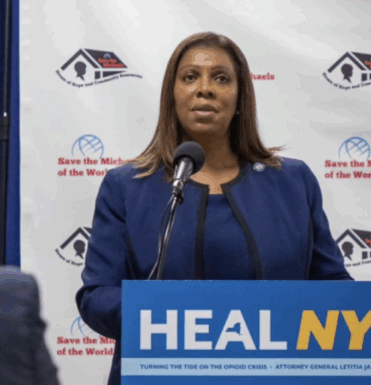
The Attorney General’s MFCU SNAFU
Attorney General Letitia James' latest fight with the Trump administration focuses on New York's Medicaid Fraud Control Unit, a federally funded agency housed in James' office.
On T Read More
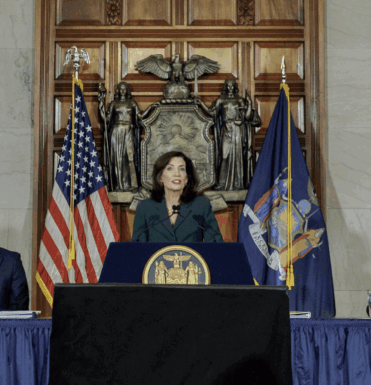
Healthcare Revelations in the Enacted Budget Financial Plan
The state financial plan published on June 10 disclosed key information about healthcare revenue and spending that lawmakers had not made public when approving the annual budget two weeks before.
Read More
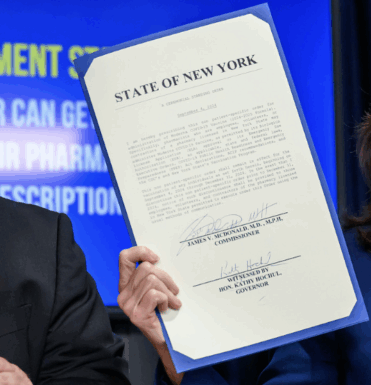
Federal Suit Traces Medicaid Fraud to the Top of NYS Government
The Trump administration's latest salvo against Medicaid fraud takes aim at a different kind of target – two high-ranking New York officials along with a major state contractor.
A Read More

Healthcare Highlights in the New State Budget
Governor Hochul's focus on affordability seems to have skipped over the healthcare portions of the new state budget.
The deal finalized May 27 Read More
Budget Deal Reportedly Earmarks $100M for 1199 and Extends MCO Tax
As Governor Hochul and legislative leaders rush to finalize the overdue state budget, outlines of some healthcare-related deals have begun to emerge from the closed-door negotiations.
Read More

Albany Should Listen to Jamie Dimon
In his annual message to shareholders, JP Morgan Chase's chief executive, Jamie Dimon, offered a timely and pointed warning for New York policymakers.
It's worth , with emphasis add Read More

Albany Wavers on Shutting Down a Medicaid Racket
As Washington threatens to crack down on fraud and abuse in New York's Medicaid program, state legislators are doing their best to demonstrate why federal intervention is needed.
A Read More