

A few weeks ago, the Empire Center and the Manhattan Institute highlighted the Legislature’s apparent rush to pass a significant shift in the law governing investments by New York’s $120 billion state and local pension fund.
Although the bill was a top priority of state Comptroller Alan Hevesi, it also raised unanswered questions about potential added financial risks for the ultimate underwriters of the pension fund — New York’s taxpayers.
What happened next could be a case study in the murky ways of the State Capitol.
The Senate, which unanimously passed Hevesi’s measure back in May without debate or a public hearing, moved on June 20 to recall the bill from the Assembly before it could be voted upon in the lower house. Almost simultaneously, the Assembly sponsor of Hevesi’s measure, Peter Abbate, introduced two alternative bills (A.8934 and A.8970).
Both bills contained language increasing the comptroller’s “basket” of more discretionary investments from 15 to 25 percent of the total pension fund; but A.8934 also contained provisions allowing the State Insurance Fund (SIF) to invest up to 10 percent of its reserve funds in equities “irrespective of the rating or other qualitative standards set forth in … the Insurance Law,” in the words of the sponsor’s memo. The state-run (and governor-controlled) SIF follows much more stringent and conservative investment standards than the pension fund. Any loosening of those standards would set off alarms in the business community, for which SIF is New York’s leading provider of workers’ compensation policies.
On the final day of session, the Senate and Assembly both passed A.8970, the bill expanding the “basket” without reference to SIF. This bill also imposes some new disclosure requirements on the comptroller, including a five-year projections of employer (i.e., tax-funded) pension contribution rates and an annual report on in-state investments by the funds.
The issue is surely arcane to many but potentially can have a significant bearing on New York’s already heavy tax burden. Stock market losses by the pension fund and retirement benefit sweeteners enacted by the Governor and Legislature in 2000 have combined to raise the taxpayers’ share of sdtate and local pension costs by billions of dollars over the past four years.
In typical Albany style, decisions involving tens of billions of dollars in public money — with huge implications for the state’s long-run fiscal stability — were made by the Legislature with virtually no public debate or explanation.
So much for “reform” in the Capitol.
About the Author

You may also like

The fatal flaw in New York’s climate Superfund law
In 2024, the New York state Legislature decided the state needed some money — $75 billion, to be exact — for “comprehensive adaptation to the effects of in New York state.”
The Legislature thought it had found Read More

Long Islanders and Empire Center Debate Homeschooling
Greater Long Island’s recent into the rise of homeschooling sparked quite a debate. Hundreds of readers on Facebook, weighing in on everything from academics and socialization to parental rights, teacher qualifications, a Read More
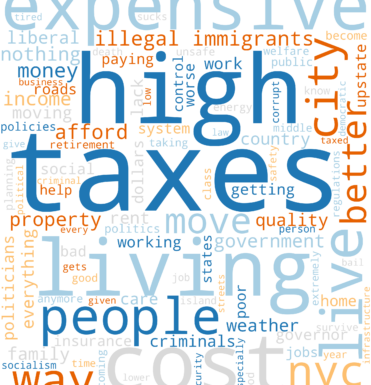
Taxes, the Cost of Living, and Feeling Ignored: Why New Yorkers Are Thinking of Leaving
FOR IMMEDIATE RELEASE ALBANY, N.Y. - New Yorkers across the political spectrum are considering leaving the state. A new finds that Republicans and independent voters most often cite taxes as the reason, while Dem Read More
Leaving New York
Executive Summary
The desire to leave New York is strong and cuts across every demographic group measured in the survey. One-third of New Yorkers have considered leaving the state within the next five years, while another third know some Read More
N.Y. fails education despite spending big
New York’s schools are spending more than ever, but student performance keeps falling.
Unsurprisingly, Empire Center’s latest opinion poll shows with how education is run. They want better results, less spending, and more choice — something th Read More
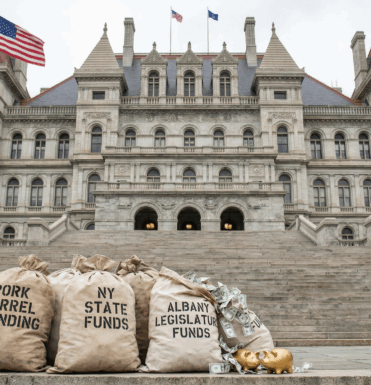
Albany Steers Nearly $100 Million in 2026 Pork Barrel Spending
Albany steered $97.2 million to 206 local projects during the first half of 2026 in the newest batch of state discretionary grants, according to. The new tranche is the latest addition to the pork-barrel grant database the Empire Center h Read More

New York’s Electricity Prices Fifth Highest in the Country
FOR IMMEDIATE RELEASE
ALBANY, N.Y. — Empire Center’s shows New York households paid the fifth‑highest residential electricity prices in the country in June 2026, trailing only Hawaii, California Read More
New Poll Shows New Yorkers Want Cheaper Energy — RGGI’s Price Record Shows They Aren’t Getting It
Editor's note: Roger Caiazza is an adjunct fellow at the Empire Center. He has a long and deep private industry background in environmental regulatory analysis and compliance. His frequently updated personal blog on New York Read More