

New York State leaders want to leverage the expanded authorization of video-lottery terminals (VLTs) to raise state revenues and to bail out the troubled thoroughbred racing industry.
The high stakes inherent in that effort are documented in a new study issued by the Maryland Tax Education Foundation (with the assistance of the Empire Center).
The study’s primary author, investment banker Jeff Hooke, concludes that New York’s racing and wagering assets — including state-owned tracks, VLT licenses and Off-Track Betting (OTB) operations — could be worth $2.1 billion if offered at a “public, competitive, open auction.”
This happens to be roughly four times the value placed on the same assets by Friends of New York Racing, a coalition of throughbred horse owners and breeders, parimutuel firms and track owners that weighed in with its own report on the subject last year.
“Essentially, FNYR’s proposal is a massive wealth transfer to private gaming interests that may or may not use the money to improve racing,” Hooke’s study says.
Hooke’s estimate includes:
* $1.4 billion for licenses to operate VLTs at or near Aqueduct and Belmont;
* $300 million for the Saratoga, Aqueduct and Belmont tracks without VLT licenses; and
* $400 million for the OTB operations.
Putting aside the more complex issue of selling racetracks and VLT licenses, New York’s six regional OTB corporations have been obvious privatization candidates since their inception more than three decades ago. They remain in the public sector primarily because they serve as a rich source of political patronage — not simply jobs, but contracts and plain old perks (such as good seats at major racing events)
Hooke’s valuable study wraps up the issue in this nutshell:
Clearly, New York State and its citizens benefit from the rich tradition of horse racing at Aqueduct, Belmont and Saratoga, the OTB operations, and related economic activities. The question is one of balance. Certainly, the state wishes to protect the New York horseracing industry, but it must do so in a way consistent with safeguarding the greater interests of taxpayers–i.e., insuring they receive a fair return on the disposal of valuable public assets. An open dialog and a fair, open disposal of valuable public property is a necessity for both the public coffers–and the public trust.
About the Author

You may also like

The fatal flaw in New York’s climate Superfund law
In 2024, the New York state Legislature decided the state needed some money — $75 billion, to be exact — for “comprehensive adaptation to the effects of in New York state.”
The Legislature thought it had found Read More

Long Islanders and Empire Center Debate Homeschooling
Greater Long Island’s recent into the rise of homeschooling sparked quite a debate. Hundreds of readers on Facebook, weighing in on everything from academics and socialization to parental rights, teacher qualifications, a Read More
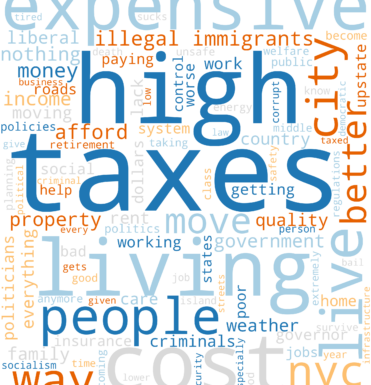
Taxes, the Cost of Living, and Feeling Ignored: Why New Yorkers Are Thinking of Leaving
FOR IMMEDIATE RELEASE ALBANY, N.Y. - New Yorkers across the political spectrum are considering leaving the state. A new finds that Republicans and independent voters most often cite taxes as the reason, while Dem Read More
Leaving New York
Executive Summary
The desire to leave New York is strong and cuts across every demographic group measured in the survey. One-third of New Yorkers have considered leaving the state within the next five years, while another third know some Read More
N.Y. fails education despite spending big
New York’s schools are spending more than ever, but student performance keeps falling.
Unsurprisingly, Empire Center’s latest opinion poll shows with how education is run. They want better results, less spending, and more choice — something th Read More
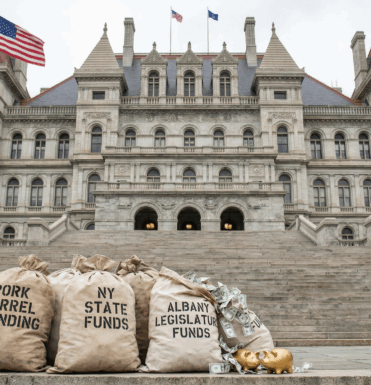
Albany Steers Nearly $100 Million in 2026 Pork Barrel Spending
Albany steered $97.2 million to 206 local projects during the first half of 2026 in the newest batch of state discretionary grants, according to. The new tranche is the latest addition to the pork-barrel grant database the Empire Center h Read More

New York’s Electricity Prices Fifth Highest in the Country
FOR IMMEDIATE RELEASE
ALBANY, N.Y. — Empire Center’s shows New York households paid the fifth‑highest residential electricity prices in the country in June 2026, trailing only Hawaii, California Read More
New Poll Shows New Yorkers Want Cheaper Energy — RGGI’s Price Record Shows They Aren’t Getting It
Editor's note: Roger Caiazza is an adjunct fellow at the Empire Center. He has a long and deep private industry background in environmental regulatory analysis and compliance. His frequently updated personal blog on New York Read More