

 If a huge private corporation with billions of dollars in revenues at its disposal was caught discharging a “probable human carcinogen” into a rural upstate New York creek, it would immediately be branded in some circles as environmental public enemy number-one.
But the federal government’s own Environmental Protection Agency (EPA) is quite deliberately doing exactly the same thing—on purpose—in the Rensselaer County town of Nassau.
As a byproduct of its ongoing cleanup of Nassau’s Dewey Loeffel Superfund site, the EPA is diluting and then releasing into the nearby Valatie Kill an organic compound known as 1,4-dioxane—which the agency itself lists in the “B2” class of probable cancer-causing agents.
The Valatie Kill is a small creek that runs into Kinderhook Lake, which empties into the Hudson River—where, just about 20 miles upstream, General Electric was forced to undertake a multi-year, expensive cleanup of polychlorinated biphenyls (PCBs), which belongs to the same B2 class of probable carcinogens as 1,4-dioxane.
The classification means that prolonged exposure to 1,4-dioxane in drinking water causes cancer in animals, specifically oral and liver cancers. The EPA has calculated an increased risk of cancer in humans when dioxane levels in drinking water reach .35 micrograms per liter. Despite use of an activated carbon filtration system, EPA data show the Loeffel facility has been discharging liquid in which dioxane levels were measured around .30 micrograms per liter. But that level, tested weekly and graphed below, has twice surged as high as 6.8 micrograms per liter. The first surge was reported by the Albany Times Union in June.

EPA has refused to establish a limit on the amount of dioxane that will be discharged into the Valatie Kill. While New York does not regulate 1,4-dioxane discharges into groundwater, several states, including New Hampshire, have limits or guidelines for dioxane levels in drinking water. The EPA’s Loeffel discharge has exceeded all of them.
Perhaps the EPA—recently criticized after one of its contractors accidentally released toxic sludge into a river in Colorado—doesn’t really believe trace amounts of B2-classified “probable” carcinogens in a body of water are anything to get too worked up about. Scientifically, this may not be an unreasonable position, either, as New York’s own non-regulation of 1,4-dioxane might suggest.
But if that’s the way EPA really thinks, why did it force GE to spend billions dredging up and hauling away all those (supposedly equally dangerous) PCBs from the Hudson’s bottom?
P.S. Nassau town supervisor David Fleming wrote in Wednesday’s Times Union about the dioxane discharge [paywall].
About the Author

You may also like

New Poll Shows New Yorkers Want Cheaper Energy — RGGI’s Price Record Shows They Aren’t Getting It
Editor's note: Roger Caiazza is an adjunct fellow at the Empire Center. He has a long and deep private industry background in environmental regulatory analysis and compliance. His frequently updated personal blog on New York Read More

New York’s Health Premiums Stayed at the Top in 2025
New Yorkers and their employers paid the highest health premiums in the lower 48 states in 2025, and their costs moved further above the U.S. average, according to recently released federal data.
Read More

NY’s Medicaid Fraud Watchdog Shows Declining Performance
Enforcement by the New York's Office of Medicaid Inspector General has dropped in recent years across a range of benchmarks – a sign that the state's anti-fraud efforts have slackened even as its Medicaid spending soared. Read More
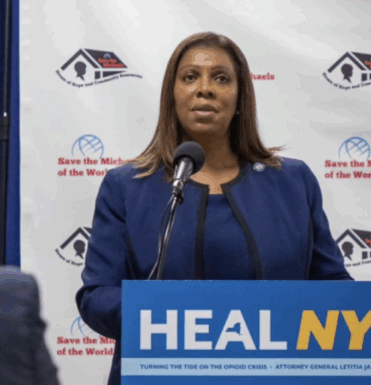
The Attorney General’s MFCU SNAFU
Attorney General Letitia James' latest fight with the Trump administration focuses on New York's Medicaid Fraud Control Unit, a federally funded agency housed in James' office.
On T Read More
Healthcare Revelations in the Enacted Budget Financial Plan
The state financial plan published on June 10 disclosed key information about healthcare revenue and spending that lawmakers had not made public when approving the annual budget two weeks before.
Read More
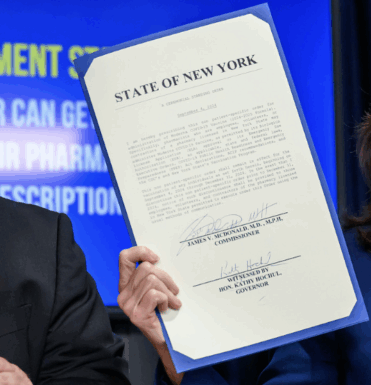
Federal Suit Traces Medicaid Fraud to the Top of NYS Government
The Trump administration's latest salvo against Medicaid fraud takes aim at a different kind of target – two high-ranking New York officials along with a major state contractor.
A Read More

It Is Time to Rethink the Regional Greenhouse Gas Initiative
Before budget negotiations, Gov. Hochul warned that unless New York changes its climate plans, New Yorkers could face a $2.26-per-gallon increase in gasoline prices. The reason is the so-called “cap-and-invest” scheme, under which energy companies wou Read More

Healthcare Highlights in the New State Budget
Governor Hochul's focus on affordability seems to have skipped over the healthcare portions of the new state budget.
The deal finalized May 27 Read More