

 Washington lawmakers are contemplating fallback healthcare legislation that risks repeating one of Albany’s most notorious policy blunders – and triggering a “death spiral” in non-group insurance markets nationwide.
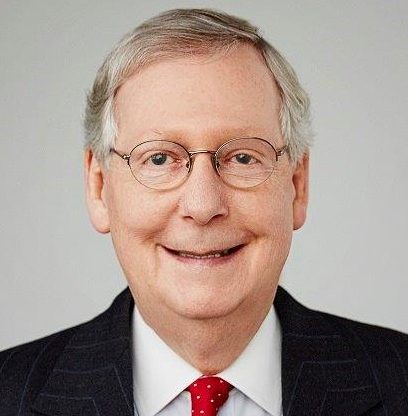
Lacking the votes to pass a comprehensive health plan, Senate GOP Leader Mitch McConnell (photo) has called for partially repealing Obamacare now, but with a two-year delay to give Republicans more time to develop a replacement.
The bill he has in mind, which previously passed both houses of Congress, would eliminate some provisions of the Affordable Care Act, including the mandate for individuals to buy coverage and the tax credits that offset high premiums for lower-income consumers.
But other, more popular provisions of the ACA would remain in place, including its requirement for insurance companies to cover pre-existing conditions, and its ban on charging higher premiums based on health status.
President Trump has tweeted his support for the repeal now, replace later approach. He and McConnell seem to think the two-year deadline would pressure more Republicans, and maybe even some Democrats, to support a replacement plan.
Already, however, several Republican senators have signaled their opposition to repeal the ACA without a replacement, raising doubt that such a bill could pass.
If such bill did become law, and were allowed to take effect, it would effectively replicate the insurance disaster that hit New York after 1992, when then-Gov. Mario Cuomo and the Legislature enacted ACA-like restraints on health plans without ACA-like subsidies or mandates for consumers.
Obliged to enroll customers with costly, chronic conditions without charging them extra, the state’s insurers had no choice but to hike premiums across the board. Health customers responded by dropping their coverage, leaving behind a sicker risk pool and pushing premiums up even higher.
Eventually, premiums soared as high as $100,000 a year, which only a few thousand very sick but wealthy individuals could afford to pay. It was a classic insurance death spiral, and a cautionary tale for health policymakers ever since. It ended only when the ACA took full effect in 2014.
Scoring an earlier partial repeal bill similar to what McConnell proposed, which would also roll back the ACA’s expansion of Medicaid, the Congressional Budget Office estimated that it would eventually add 32 million to the ranks of the uninsured – which was more than full repeal. The CBO further forecast that non-group premiums would jump 20 to 25 percent right away, and double over 10 years.
The lessons of New York history suggest that those grim projections are no exaggeration.
About the Author

You may also like

New York’s Health Premiums Stayed at the Top in 2025
New Yorkers and their employers paid the highest health premiums in the lower 48 states in 2025, and their costs moved further above the U.S. average, according to recently released federal data.
Read More

Healthcare Highlights in the New State Budget
Governor Hochul's focus on affordability seems to have skipped over the healthcare portions of the new state budget.
The deal finalized May 27 Read More
Budget Deal Reportedly Earmarks $100M for 1199 and Extends MCO Tax
As Governor Hochul and legislative leaders rush to finalize the overdue state budget, outlines of some healthcare-related deals have begun to emerge from the closed-door negotiations.
Read More
The Bottom Line of Hochul’s Essential Plan Overhaul
Now that New York has won partial federal approval for overhauling its Essential Plan, it's worth being clear about what the state is doing and why.
The is not primarily about "pre Read More
In the Fight Over ACA Tax Credits, the Stakes Are Lowest for New York
As Washington skirmishes over the future of enhanced tax credits under the Affordable Care Act, New York has relatively little to gain or lose.
The number of New Yorkers using any A Read More

Why New York’s Health Premiums Keep Going Up
New Yorkers continue to face some of the costliest health premiums in the U.S., and the insurance industry's recently finalized rate applications shed light on why that is.
In summa Read More

How Immigrants Became a Cash Cow for New York’s Essential Plan
The Hochul administration's move to shrink the Essential Plan in response to federal budget cuts has exposed a surprising reality:
For the past decade, immigrants have been a cash c Read More
As Albany’s Session Ends, Watch for Rising Health Costs
Every session of the state Legislature brings a fresh crop of proposals that would drive up health-care costs, and 2025 is no exception.
Here is a sampling of pending bills that, if Read More