

New York state energy officials are taking the exceptional step of hiring a public relations outfit, using $500,000 per year of public money, to “maintain a positive narrative” and “respond to negative viewpoints” about the state’s 2019 climate law.
The just-released request for proposal from the New York State Energy Research and Development Agency (NYSERDA) seeks:
public relations professionals or public relations firms interested in providing public relations/communications services to advance the goals of NYSERDA and the Climate Leadership Community and Protection Act (Climate Act) by building awareness of and support for the Climate Act and assisting in developing a narrative around New York State’s clean energy and climate priorities and providing rapid response communications services, if necessary.
The Climate Act requires state agencies to significantly cut greenhouse gas emissions across every sector of the economy by 2030 and to shut down all the state’s fossil fuel plants by 2040, and it allows those agencies, for the most part, to decide how those goals are met.
The law was passed without anything close to a cost estimate or feasibility study, and five years into its implementation, the Climate Act has created headaches for state officials. Among other things, the state Department of Environmental Conservation has blown off a statutory deadline to implement related regulations that would, among other things, ban replacement gas appliances and fossil-fuel furnaces and impose an economywide tax-like charge on businesses responsible for greenhouse gas emissions.
NYSERDA scoops up funding from a range of grants, taxes and energy-related charges, and it’s not clear which would be used to fund this contract.
The RFP doesn’t just want someone to promote the Climate Act. It specifically seeks someone who can “rapidly respond to negative viewpoints and perceptions about the State’s climate and clean energy goals under the Climate Act, the costs associated with the Climate Act, and challenges to particular policies and programs.”
NYSERDA posted the RFP two weeks after a report from the Empire Center showed how state officials had violated the law, misrepresented Climate Act costs and made fanciful assumptions about how the electric grid would function in 2030.
(Given how NYSERDA’s payroll has doubled in the past decade, and that it already has sizable communications and marketing operation, the push to bring in outside help is even more remarkable).
The RFP suggests NYSERDA is especially concerned about certain areas of the climate program, noting they should be able to “immediately address emerging unforeseen events that draw media scrutiny” in areas including:
- “Questions and concerns on affordability for New Yorkers and direct costs to ratepayers as a result of the State’s clean energy and climate transition” including the cost of the planned “cap-and-invest” system.
- “Concerns related to the cost and practicality of supporting building decarbonization, the implementation of codes for same and a phase out of fossil fuels in new construction;”
- “Concerns related to transitioning cars, trucks, and SUVs sold in New York to zero emissions, and requiring all school buses in operation in the state to be zero-emission by 2035;” (This last policy, required by a separate state law, has given school districts sticker-shock, both with the cost premium of electric models and the unexpected cost of electricity infrastructure upgrades).
- “Challenges with the lithium-ion batteries and the scale up of stationary battery storage systems, as well as related fires, safety issues, and the work of the associated working groups.”
- “[A]ddressing the headwinds” related to the state’s large-scale renewable energy projects (and presumably NYSERDA’s decision to let offshore wind developers extort an extra $8 billion or so out of state electricity customers last month).
Encouraging people to use less energy or to participate in state programs can serve the public interest by lowering costs for everyone or improving grid reliability. And educating them about a law’s existence to increase compliance is one thing, but spending public funds to “build support” and challenge accurate criticism sounds more like political speech that taxpayers should not be compelled to fund. If not unconstitutional, it certainly is illiberal.
What would the response have been if Governor George Pataki had used funds seized from low-level drug offenders to hire flacks to “maintain a positive narrative” that the Rockefeller drug laws were good and shouldn’t be changed? Or if an upstate county had used sales tax revenue to buy billboards to reduce support for the Climate Act, perhaps by telling residents how Climate Act programs to benefit New York City will soon be funded with hidden charges on their electricity bills?
It’s easy to imagine the—justifiably—breathless tantrums that would have ensued if a different administration had used NYSERDA funds to pressure lawmakers to repeal the state’s ban on natural gas fracking or obstacles to new nuclear power plants.
NYSERDA deserves extra skepticism because the state has gone to great lengths to keep people in the dark about the Climate Act. Legally required cost estimates for Climate Act programs were never released and the revised State Energy Plan, which would show where costs are headed, is several years overdue. NYSERDA spent a year in court fighting to block the release of a Cuomo-era study which appeared to raise doubts about the costs and feasibility of the state’s climate agenda.
Ultimately it matters little what people are told about the Climate Act, by NYSERDA or otherwise. New Yorkers will in short order face higher fuel costs, higher property taxes, higher compliance costs and higher electricity rates, interspersed with news about businesses either leaving or cancelling investments because of energy concerns.
The Climate Act, on its own, will tell people exactly how it works. And that might be what NYSERDA fears most.
About the Author

You may also like

New Poll Shows New Yorkers Want Cheaper Energy — RGGI’s Price Record Shows They Aren’t Getting It
Editor's note: Roger Caiazza is an adjunct fellow at the Empire Center. He has a long and deep private industry background in environmental regulatory analysis and compliance. His frequently updated personal blog on New York Read More

New York’s Health Premiums Stayed at the Top in 2025
New Yorkers and their employers paid the highest health premiums in the lower 48 states in 2025, and their costs moved further above the U.S. average, according to recently released federal data.
Read More

NY’s Medicaid Fraud Watchdog Shows Declining Performance
Enforcement by the New York's Office of Medicaid Inspector General has dropped in recent years across a range of benchmarks – a sign that the state's anti-fraud efforts have slackened even as its Medicaid spending soared. Read More
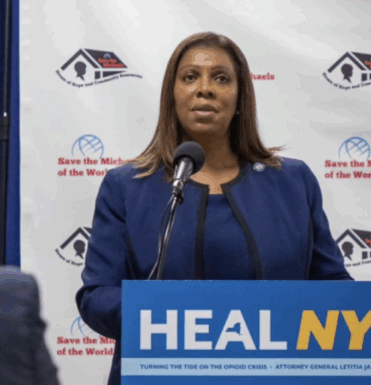
The Attorney General’s MFCU SNAFU
Attorney General Letitia James' latest fight with the Trump administration focuses on New York's Medicaid Fraud Control Unit, a federally funded agency housed in James' office.
On T Read More
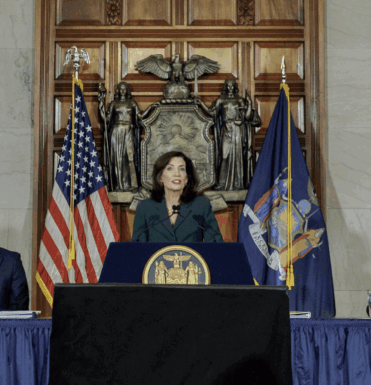
Healthcare Revelations in the Enacted Budget Financial Plan
The state financial plan published on June 10 disclosed key information about healthcare revenue and spending that lawmakers had not made public when approving the annual budget two weeks before.
Read More
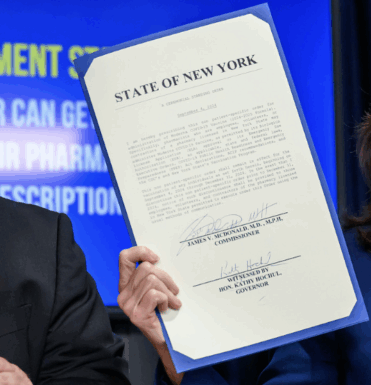
Federal Suit Traces Medicaid Fraud to the Top of NYS Government
The Trump administration's latest salvo against Medicaid fraud takes aim at a different kind of target – two high-ranking New York officials along with a major state contractor.
A Read More

It Is Time to Rethink the Regional Greenhouse Gas Initiative
Before budget negotiations, Gov. Hochul warned that unless New York changes its climate plans, New Yorkers could face a $2.26-per-gallon increase in gasoline prices. The reason is the so-called “cap-and-invest” scheme, under which energy companies wou Read More

Healthcare Highlights in the New State Budget
Governor Hochul's focus on affordability seems to have skipped over the healthcare portions of the new state budget.
The deal finalized May 27 Read More