
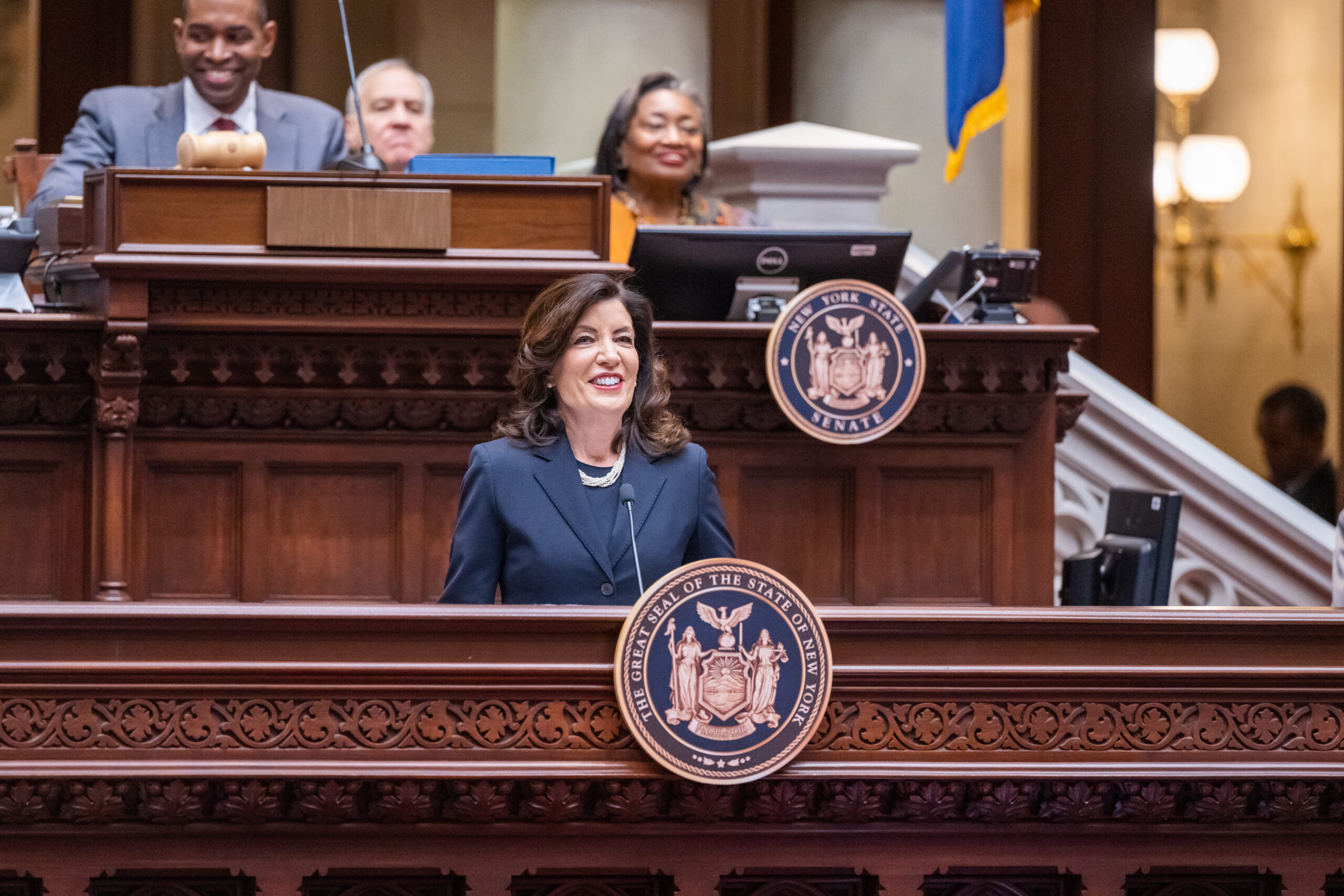
Governor Hochul has made Medicaid her dominant budget priority over the past four years, increasing the state’s annual share of the program by $17 billion – which is more new money than she allocated for every other part of state government, combined.
Yet she barely mentions the program in a list of accomplishments she posted to mark her fourth anniversary in office, suggesting that her heavy spending has bought few results that she cares to boast about.
The list used the word “Medicaid” only once, noting that Hochul signed legislation authorizing the program to cover remote monitoring of pregnant women.
The program plays an uncredited role in two other listed items: a $1 billion “investment in mental health care” over several years, a portion of which is to come from Medicaid; and efforts to bolster access to abortion, which include higher Medicaid reimbursements for providers.
Otherwise, the safety-net health plan that covers one-third of the population goes unmentioned in a list of 47 bullet points. The list touts a cumulative school-aid increase of $8 billion, but says nothing about the more than twice-as-large amount that she plowed into the health-care system.

This near-silence is consistent with her State of the State speech in January, in which she had little to say about Medicaid or health care generally.
Hochul has occasionally spoken out about problems that need fixing – such as the dismal quality ratings of the state’s hospitals, or the rapidly rising cost of home health care. Yet her actions have mostly consisted of adding billions to the Medicaid budget (which is already the highest per capita in the country) and pushing to grow the health-care workforce (which is already the largest per capita in the country).
Both of these priorities happen to align with those of the health-care industry and its major labor union, 1199 SEIU, which are consistently among Albany’s biggest-spending special interests – and campaign donors.
The result has been a 61 percent increase in state-share Medicaid spending in four years, compared to a 57 percent increase over 10 years during the Cuomo administration.
Meanwhile, festering health-care problems are going unaddressed, such persistently low quality ratings (and high emergency-room wait times) in New York’s hospital system, and the grim conditions in many nursing homes, as exposed in lawsuits by Attorney General Letitia James.
In one major attempt at reform, Hochul abruptly moved to consolidate Medicaid’s Consumer Directed Personal Assistance Program, or CDPAP, under a single statewide contractor, replacing hundreds of smaller “fiscal intermediaries.”
Secretively negotiated and hastily implemented, the overhaul has proven to be disruptive for recipients and caregivers alike, promises modest savings and does not address the eligibility rules that have allowed the program to grow so explosively.
One of the few stakeholders with reason to cheer was 1199, because the consolidation has paved the way for the union to organize CDPAP workers and boost its dues-paying membership by hundreds of thousands.
In 2023, Hochul established a Commission on the Future of Health Care and filled it with well-credentialed appointees, many of which come from outside the Albany bubble.
Although its report is eight months overdue, Chairwoman Sherry Glied, dean of the NYU Wagner School of Public Service, said in a recent interview that improving the poor quality of New York’s hospitals – which she called “not acceptable” – would be one of the panel’s top priorities.
In creating that commission, Hochul tacitly acknowledged that she needed a stronger agenda on health care – or at least one that goes beyond spending more on Medicaid.
Improving hospital quality would be a good place for her to start.
About the Author

You may also like

New York’s Health Premiums Stayed at the Top in 2025
New Yorkers and their employers paid the highest health premiums in the lower 48 states in 2025, and their costs moved further above the U.S. average, according to recently released federal data.
Read More

NY’s Medicaid Fraud Watchdog Shows Declining Performance
Enforcement by the New York's Office of Medicaid Inspector General has dropped in recent years across a range of benchmarks – a sign that the state's anti-fraud efforts have slackened even as its Medicaid spending soared. Read More
The Attorney General’s MFCU SNAFU
Attorney General Letitia James' latest fight with the Trump administration focuses on New York's Medicaid Fraud Control Unit, a federally funded agency housed in James' office.
On T Read More
Healthcare Revelations in the Enacted Budget Financial Plan
The state financial plan published on June 10 disclosed key information about healthcare revenue and spending that lawmakers had not made public when approving the annual budget two weeks before.
Read More
Federal Suit Traces Medicaid Fraud to the Top of NYS Government
The Trump administration's latest salvo against Medicaid fraud takes aim at a different kind of target – two high-ranking New York officials along with a major state contractor.
A Read More

Healthcare Highlights in the New State Budget
Governor Hochul's focus on affordability seems to have skipped over the healthcare portions of the new state budget.
The deal finalized May 27 Read More

Lawmakers Consider Hiking Fees for Filling Prescriptions
UPDATE: The proposal discussed below passed the Assembly Friday evening by an unofficial vote of 133-0. Having previously been approved by the Senate, the bill will head to Governor Hochul's desk for her signature or ve Read More
Budget Deal Reportedly Earmarks $100M for 1199 and Extends MCO Tax
As Governor Hochul and legislative leaders rush to finalize the overdue state budget, outlines of some healthcare-related deals have begun to emerge from the closed-door negotiations.
Read More