

After a weak 2018, personal income growth matched or exceeded national averages in most parts of New York State in 2019, according to the latest estimates from the federal Commerce Department’s Bureau of Economic Analysis (BEA).
The 2019 income rebound was most pronounced in New York’s rural counties, where personal income growth generally exceeded the national non-metropolitan average of 3.5 percent. However, among upstate’s larger and more urbanized counties, only Erie matched the national metropolitan area growth average of 4 percent.
The growth trends in New York metropolitan statistical areas are illustrated in the table below. Note: measured by income growth, the top-ranking MSA in the state last year was Poughkeepsie-Newburgh-Middletown, up 5 percent, which ranked 57 out of 385 metro areas nationally, with Glens Falls and Utica-Rome also cracking the top 100. The slowest-growing area in New York was previously booming Ithaca, ranking 311 nationally.

The BEA’s 50-state map of county-level personal income growth rates illustrates trends across the country. Most New York counties are in darker shades, denoting higher rates of growth.
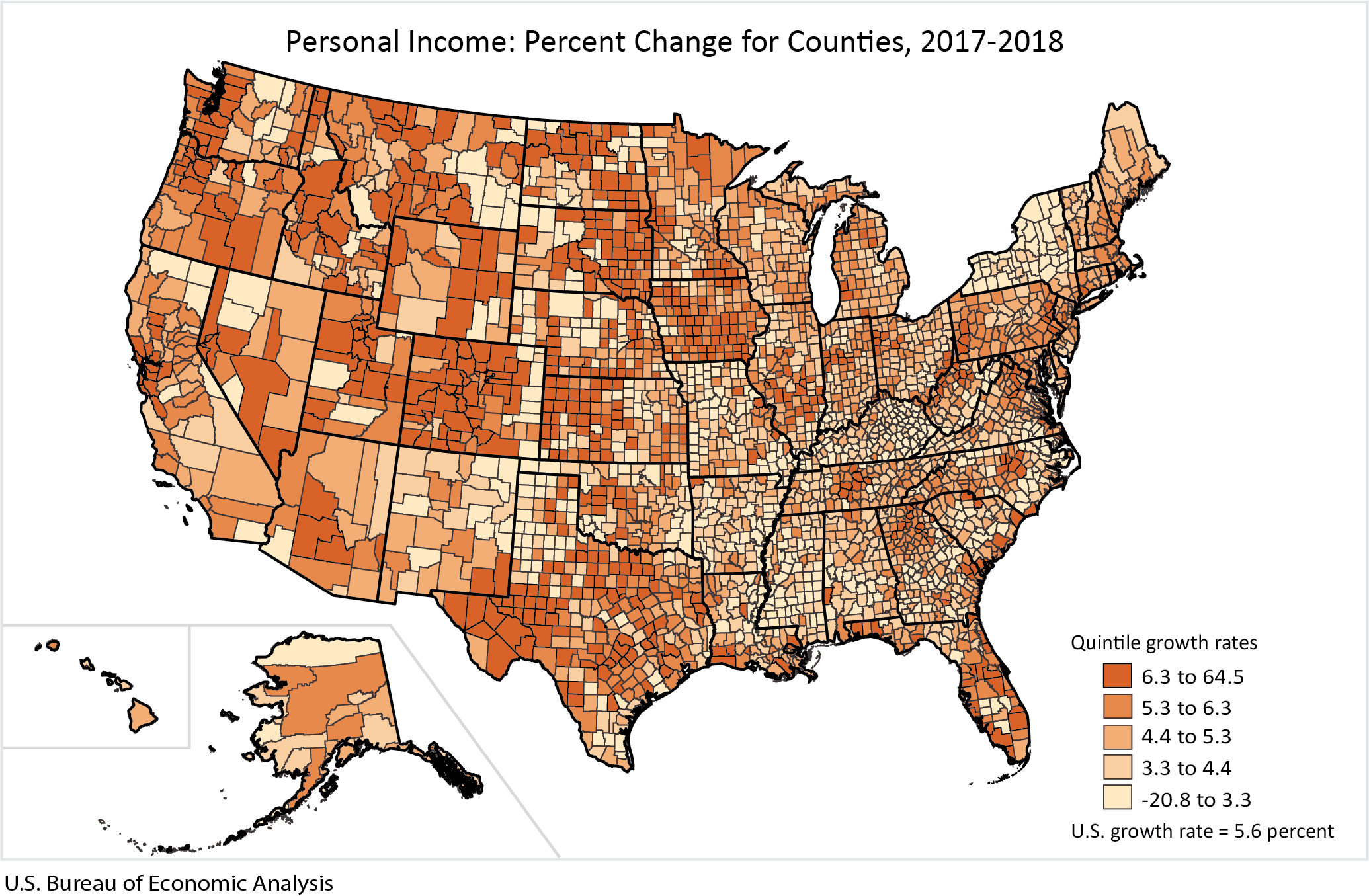

Personal income measures how much the residents of a given area have earned from wages and salaries, and from business proprietor receipts, royalties, rents and transfer payments such as social security benefits and pensions. Because it does not include capital gains, it does not fully reflect the wealth of any given locality. However, it is an important reflection of economic health, and especially of purchasing power.
You may also like

Hochul’s Energy Infrastructure Plan Gets the Diagnosis Right but Offers No Prescription
Editor’s note: Roger Caiazza is an adjunct fellow at the Empire Center. He has a long and deep private industry background in environmental regulatory analysis and compliance. His frequently updated personal blog on New York State environmental poli Read More
New Poll Shows New Yorkers Want Cheaper Energy — RGGI’s Price Record Shows They Aren’t Getting It
Editor's note: Roger Caiazza is an adjunct fellow at the Empire Center. He has a long and deep private industry background in environmental regulatory analysis and compliance. His frequently updated personal blog on New York Read More

New York’s Health Premiums Stayed at the Top in 2025
New Yorkers and their employers paid the highest health premiums in the lower 48 states in 2025, and their costs moved further above the U.S. average, according to recently released federal data.
Read More

NY’s Medicaid Fraud Watchdog Shows Declining Performance
Enforcement by the New York's Office of Medicaid Inspector General has dropped in recent years across a range of benchmarks – a sign that the state's anti-fraud efforts have slackened even as its Medicaid spending soared. Read More

The Attorney General’s MFCU SNAFU
Attorney General Letitia James' latest fight with the Trump administration focuses on New York's Medicaid Fraud Control Unit, a federally funded agency housed in James' office.
On T Read More
Healthcare Revelations in the Enacted Budget Financial Plan
The state financial plan published on June 10 disclosed key information about healthcare revenue and spending that lawmakers had not made public when approving the annual budget two weeks before.
Read More
Federal Suit Traces Medicaid Fraud to the Top of NYS Government
The Trump administration's latest salvo against Medicaid fraud takes aim at a different kind of target – two high-ranking New York officials along with a major state contractor.
A Read More

It Is Time to Rethink the Regional Greenhouse Gas Initiative
Before budget negotiations, Gov. Hochul warned that unless New York changes its climate plans, New Yorkers could face a $2.26-per-gallon increase in gasoline prices. The reason is the so-called “cap-and-invest” scheme, under which energy companies wou Read More