

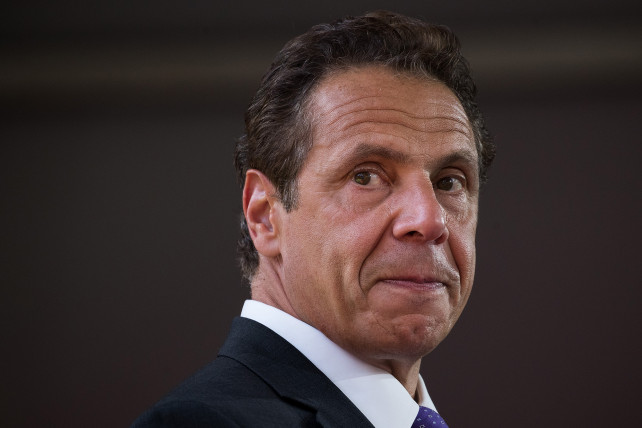
 In approving the $69 billion merger of CVS and Aetna, the state Department of Financial Services attached a noteworthy condition: The two companies must forward $40 million to the state of New York.
It was the second time this year that the Cuomo administration has leveraged its regulatory authority over a health insurance company to extract a large sum of cash. This spring, the state commanded $2 billion in proceeds from the sale of Fidelis Care to Centene.
Although smaller in scale, the CVS-Aetna payment shares problematic features of the Fidelis deal: The state is again squeezing money from companies in the context of a regulatory review, which smacks of a shakedown. And the governor has again arranged to spend the money without consulting the Legislature, which is an end-run around constitutional checks and balances that opens to door to abuse of public funds.
In the Fidelis transaction, the state’s receipts included $500 million from Centene and $1.5 billion that were effectively diverted from charity. Fidelis had been a non-profit health plan controlled by the state’s Catholic bishops, who used proceeds of the sale to endow a foundation. The resulting Mother Cabrini Health Foundation ended up receiving about $3.2 billion instead of almost $5 billion.
The state has no specific entitlement to any share of proceeds when insurers are sold. Nor have the parties to these deals been accused of wrongdoing. Rather, the companies are agreeing to make the payments voluntarily, albeit under an implicit threat that their high-stakes transactions could be blocked or delayed.
Receipts from both Fidelis and CVS-Aetna are flowing to the so-called Health Care Transformation Fund, established as part of this year’s budget, which the governor and his appointees can use for health-related purposes without consulting the Legislature.
The first such expenditure, revealed earlier this month, is going toward a Medicaid rate increase earmarked to increase the pay and benefits of hospital and nursing home workers – many of whom are represented by a politically influential union allied with Cuomo. Although the rate increase was effective Nov. 1, full details have not yet been made public.
The governor’s rationale for the Health Care Transformation Fund has shifted over time, and the rules governing its use give him flexibility to spend it on almost any health-related purpose.
The payments are one of 14 conditions included in DFS’s “decision and order” approving the CVS-Aetna transaction:
The applicants agree to pay $40 million over three years to New York State, subject to a plan approved by the superintendent of financial services and the director of the Division of the Budget. Such plan shall include, but not be limited to: (i) funds paid to organizations to support health insurance education and enrollment activities; and (ii) funds to strengthen New York health care transformation activities, which may include payments to the New York State Health Care Transformation Fund.
About the Author

You may also like
The Attorney General’s MFCU SNAFU
Attorney General Letitia James' latest fight with the Trump administration focuses on New York's Medicaid Fraud Control Unit, a federally funded agency housed in James' office.
On T Read More
Healthcare Revelations in the Enacted Budget Financial Plan
The state financial plan published on June 10 disclosed key information about healthcare revenue and spending that lawmakers had not made public when approving the annual budget two weeks before.
Read More
Federal Suit Traces Medicaid Fraud to the Top of NYS Government
The Trump administration's latest salvo against Medicaid fraud takes aim at a different kind of target – two high-ranking New York officials along with a major state contractor.
A Read More

Healthcare Highlights in the New State Budget
Governor Hochul's focus on affordability seems to have skipped over the healthcare portions of the new state budget.
The deal finalized May 27 Read More

Lawmakers Consider Hiking Fees for Filling Prescriptions
UPDATE: The proposal discussed below passed the Assembly Friday evening by an unofficial vote of 133-0. Having previously been approved by the Senate, the bill will head to Governor Hochul's desk for her signature or ve Read More
Budget Deal Reportedly Earmarks $100M for 1199 and Extends MCO Tax
As Governor Hochul and legislative leaders rush to finalize the overdue state budget, outlines of some healthcare-related deals have begun to emerge from the closed-door negotiations.
Read More

Albany Wavers on Shutting Down a Medicaid Racket
As Washington threatens to crack down on fraud and abuse in New York's Medicaid program, state legislators are doing their best to demonstrate why federal intervention is needed.
A Read More

Getting to the Bottom of the 340B Drug Discount Boondoggle
Some of New York's largest and most prosperous hospitals are reporting rapidly growing amounts of revenue from pharmacy sales – most of it apparently flowing from a controversial drug discount program known as 340B. Read More