

This year, for once, state lawmakers’ failure to pass a timely budget could prove to be a stroke of luck.
When President Trump rolled out his economy-rattling tariffs on April 2, Albany leaders had not agreed on a spending plan for the fiscal year that began April 1 – and are expected to keep haggling for another week or more.
The upside of this all-too-familiar delay is that Governor Hochul and Legislature can now adjust their budget based on the newly dismal fiscal outlook, and avoid making promises taxpayers can’t afford to keep. Whether they will seize the opportunity remains to be seen.
On Wednesday, Trump issued a 90-day suspension of his threatened his so-called “reciprocal” tariffs for all countries but China while keeping in place his across-the-board 10 percent levy on all imported goods. By the time of that announcement, fear of a global trade war had wiped away a year’s worth of gains on Wall Street and led some forecasters to say a recession was likely before the end of 2025.
Although stocks partially rallied on Wednesday’s news, business leaders and investors might well remain spooked for some time to come, knowing that the president could change his mind again.
The stock sell-off on its own was enough to spell serious trouble for New York’s financial outlook. In bullish times, Wall Street-related economic activity – such as the bonuses paid by securities firms and the capital gains realized by investors – has accounted for as much as 25 percent of the state’s annual tax revenue. In bearish years, its share has dropped to half that amount.
Even before the events of last week, Albany’s budget makers were flirting with disaster. Hochul’s executive budget proposal in January called for the biggest one-year increase in state-funded spending since the first Cuomo administration in the 1980s.
In spite of what she acknowledged was a structural imbalance between spending and revenues – and out-year budget gaps in the billions – Hochul proposed sending $3 billion in “inflation refund checks” to 8.6 million New Yorkers based on a supposed sales tax surplus that didn’t really exist.
She called for increasing state outlays on the nation’s most expensive Medicaid program by 17 percent in a single year, which came on top of a cumulative 36 percent increase over the previous three years.
She urged an almost 5 percent increase in school aid even though New York already spends more per pupil than any other state and enrollment has been declining in recent years.
She also proposed adding another $100 million to the state’s wasteful $700 million film and television tax credit, despite an independent analysis which found that it “is at best a break-even proposition and more likely a net cost to NYS.”
Predictably, Assembly and Senate leaders responded to the governor’s spendthrift budget by offering their own budgets that would cost billions more.
In Washington, meanwhile, ascendant Republicans had other plans.
The so-called Department of Government Efficiency headed by Elon Musk announced cuts to research grants that would reduce overhead funding for universities nationwide, including SUNY.
The House approved a budget resolution that called for reducing future Medicaid funding by as much as $880 billion over 10 years. Although details are undecided, such a plan would likely trim federal payment to New York by billions. Trump rescinded hundreds of millions more in aid for New York’s public health programs through executive action.
When asked about these cutbacks, Albany leaders said they had no immediate plans to respond. They seemed to hold out hope that Congressional Republicans would ultimately shy away from touching the third rail of health-care funding, as they did in 2017.
Albany’s apparent strategy was to wait and see what would happen – and to blame Washington if mid-year budget cuts became necessary.
Trump’s on-again, off-again tariffs are a threat of a different stripe. Under current law, the president can impose, modify or lift import levies on his own executive authority, without the need to rally members of Congress for a politically difficult vote. And though the long-term effects of tariffs are unclear, the short-term impact has already been felt – and undoubtedly diminished what the state can reasonably expect in tax revenues for the year ahead.
It’s clearer than ever that Albany should not count on its usual level of federal funding – or even a steady economy – over the next 12 months. As a matter of prudence, Governor Hochul and the Legislature should hedge against rough times by dropping their plans for big spending increases, cancelling the gimmicky “rebate” checks and Hollywood giveaways, and keeping as much as possible of their cash in reserve.
Postponing the hard decisions to a future special session is no solution. As a matter of simple math, spending cuts enacted halfway through the fiscal year would have to be twice as deep as preventive measures taken now.
After what happened over the past week, New York’s budget makers cannot say they weren’t warned.
About the Author

You may also like

NY’s Medicaid Fraud Watchdog Shows Declining Performance
Enforcement by the New York's Office of Medicaid Inspector General has dropped in recent years across a range of benchmarks – a sign that the state's anti-fraud efforts have slackened even as its Medicaid spending soared. Read More
The Attorney General’s MFCU SNAFU
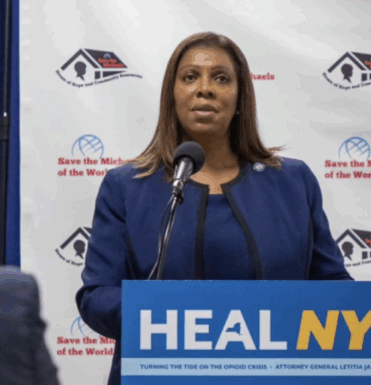
Attorney General Letitia James' latest fight with the Trump administration focuses on New York's Medicaid Fraud Control Unit, a federally funded agency housed in James' office.
On T Read More
Healthcare Revelations in the Enacted Budget Financial Plan
The state financial plan published on June 10 disclosed key information about healthcare revenue and spending that lawmakers had not made public when approving the annual budget two weeks before.
Read More
Federal Suit Traces Medicaid Fraud to the Top of NYS Government
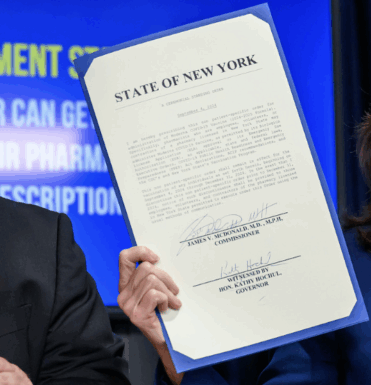
The Trump administration's latest salvo against Medicaid fraud takes aim at a different kind of target – two high-ranking New York officials along with a major state contractor.
A Read More

Healthcare Highlights in the New State Budget
Governor Hochul's focus on affordability seems to have skipped over the healthcare portions of the new state budget.
The deal finalized May 27 Read More
Budget Deal Reportedly Earmarks $100M for 1199 and Extends MCO Tax
As Governor Hochul and legislative leaders rush to finalize the overdue state budget, outlines of some healthcare-related deals have begun to emerge from the closed-door negotiations.
Read More

Four Problems with a Statewide Pied-à-Terre Tax
Soon after Governor Hochul floated the idea of a "pied-à-terre" tax in New York City, Albany Sen. Patricia Fahy proposed to expand the concept to the rest of the state.
As with H Read More
Albany Should Listen to Jamie Dimon
In his annual message to shareholders, JP Morgan Chase's chief executive, Jamie Dimon, offered a timely and pointed warning for New York policymakers.
It's worth , with emphasis add Read More